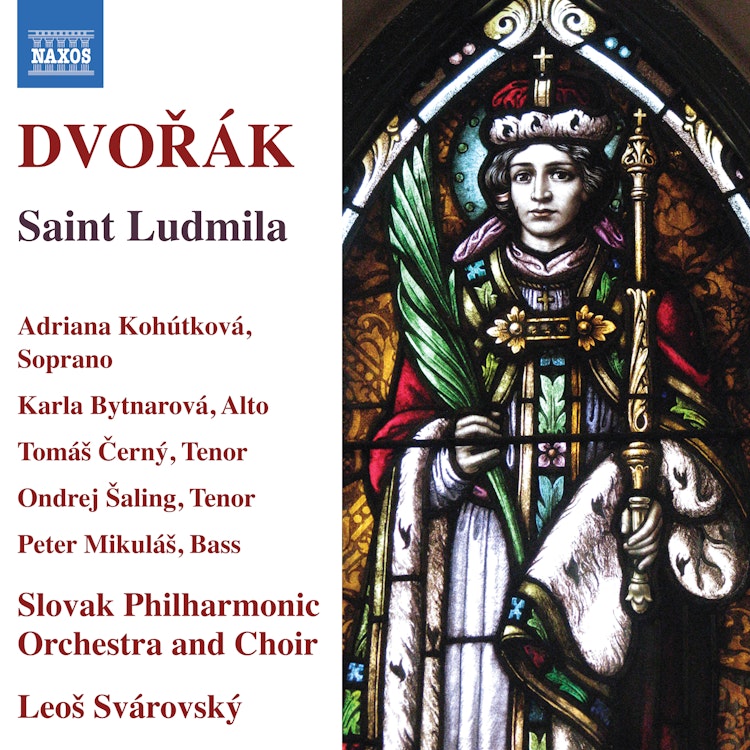
Saint Ludmila, written for large forces and a prominent chorus, follows the tradition of Handel's choral works and is considered one of Dvořák's greatest works alongside his Stabat Mater and Requiem.
Composition History
Dvořák's oratorio Saint Ludmila was commissioned for the Leeds Festival in England and premiered there in October 1886 with a large orchestra and chorus.
Historical Context
The subject of Saint Ludmila reflects an important event in Bohemian history: Ludmila, wife of Bořivoj, converted to Christianity and became the patron saint of Bohemia.
Composer Biography
Dvořák's musical abilities were encouraged by his father, who later became a zither player, and Dvořák studied at the Prague Organ School from 1857 to 1859.
Composer Biography
Antonín Dvořák, the composer, was born in 1841 in Bohemia, the eldest son of a butcher and innkeeper, and was initially expected to follow the family trade.
Composer Biography
Dvořák earned a living as a viola player in a band that formed the nucleus of the Czech Provisional Theatre Orchestra, where Bedřich Smetana was later appointed conductor.
Performer Biography
Leoš Svárovský, the conductor, studied flute and conducting in Prague as the last student of the renowned professor Václav Neumann.