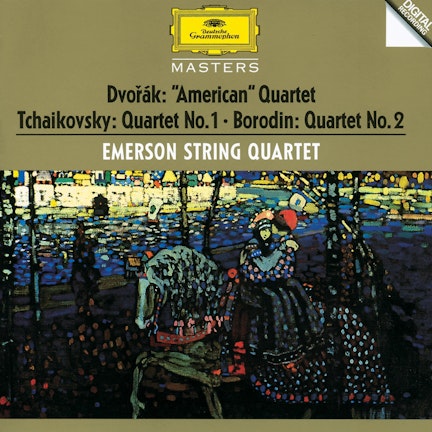
Dvořák composed his 'American' Quartet in about two weeks during June 1893 while he was in America.
Historical Context
Mrs. Jeanette Thurber, founder of the National Conservatory of Music in New York, was progressive for her time, championing racial integration, women, and the handicapped in her conservatory's operation.
Album & Artwork
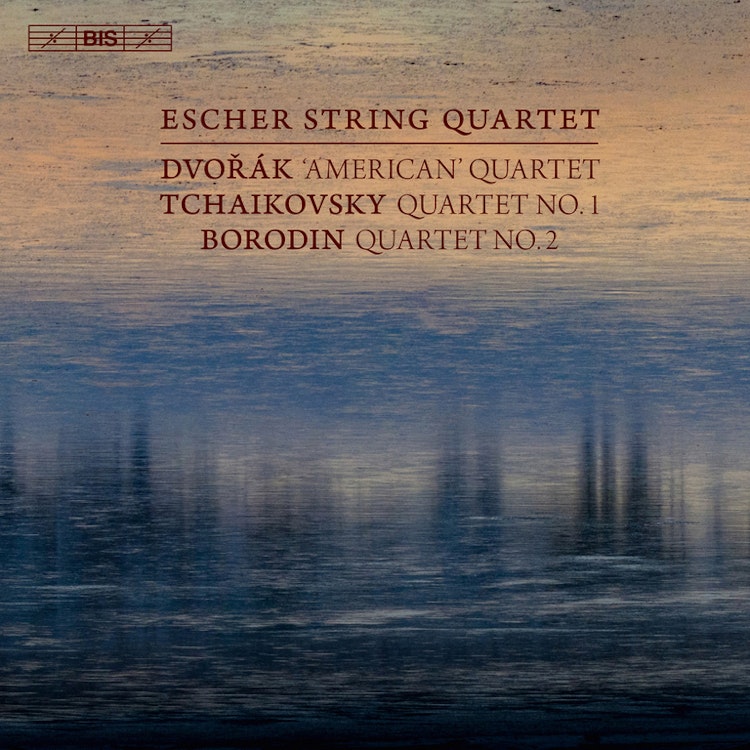
The Escher String Quartet is named after the Dutch graphic artist M. C. Escher, inspired by his method of individual components working together to form a whole.
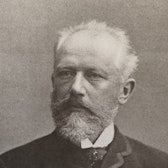
Composer Biography
Dvořák served as director of the National Conservatory of Music in New York from 1892 to 1895, a position he initially resisted due to the distance from his home.
Composition History
Tchaikovsky's String Quartet No. 1 was the first major chamber music work by a prominent Russian composer.
Composer's Artistic Vision
Borodin composed his chamber works despite strong opposition from his fellow composers in 'The Five' (Mussorgsky, Rimsky-Korsakov, Cui, and Balakirev), who were generally unsympathetic to 'absolute' or non-programmatic music.
Composer Biography
Alexander Borodin, a cellist and enthusiastic chamber musician, studied chemistry in Heidelberg from 1859-61.