The final movement of the Violin Concerto incorporates two Slavonic dance forms: the furiant, known for its rhythmic variety and strong accents, and the dumka, a slower, more melancholy dance of Ukrainian origin.
Composer Biography
Antonín Dvořák's career received a significant boost when Johannes Brahms, a renowned composer, took an interest in his talent and recommended his works to his publisher.
Compositional Technique
The Violin Concerto's first movement departs from classical form by eschewing orchestral tuttis and spectacular cadenzas, and replacing the recapitulation with a brief, idyllic violin cadenza that transitions directly to the slow movement.
Composition History
Dvořák's Legends, a cycle of ten pieces, were originally composed for two pianos and were popular for home use before being orchestrated for the concert hall.
Composition History
The Violin Concerto underwent extensive revisions based on feedback from the great violinist Joseph Joachim, to whom Dvořák had dedicated the work.
Performer Biography
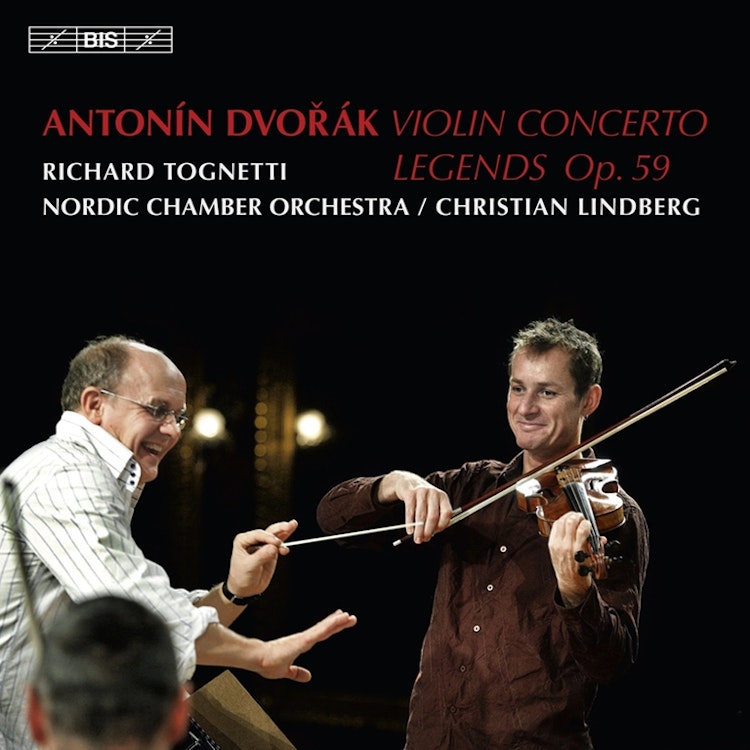
Richard Tognetti, the violinist and conductor on this album, performs on period, modern, and electric instruments and has expanded the chamber orchestra repertoire through his arrangements and compositions.
Composition History
Dvořák's Violin Concerto was commissioned by Fritz Simrock, director of the Simrock publishing company, following the successful premiere of Brahms's concerto.
You might also enjoy...
Rubinstein: Violin Concerto, Op. 46 / Don Quixote, Op. 87
Rubinstein: Violin Concerto, Op. 46 / Don Quixote, Op. 87