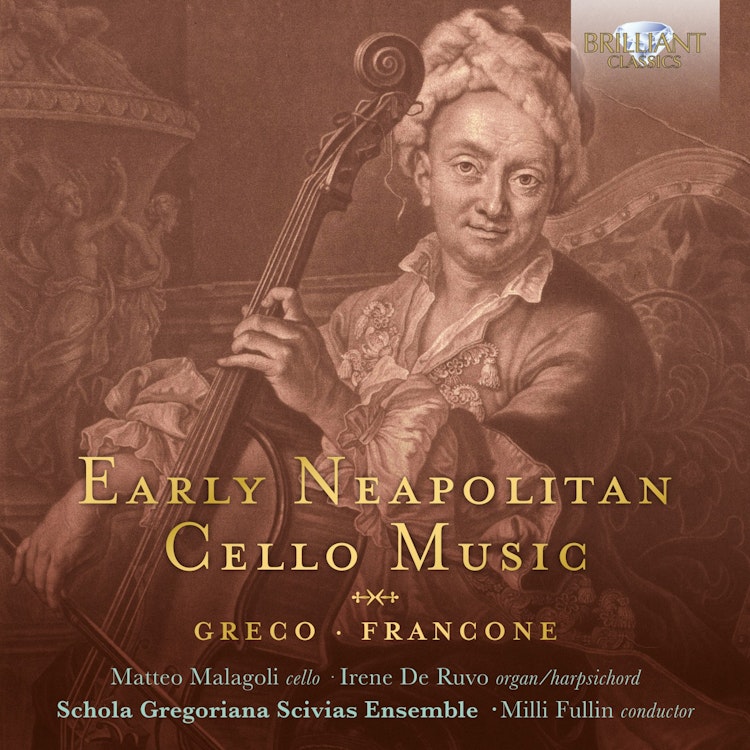
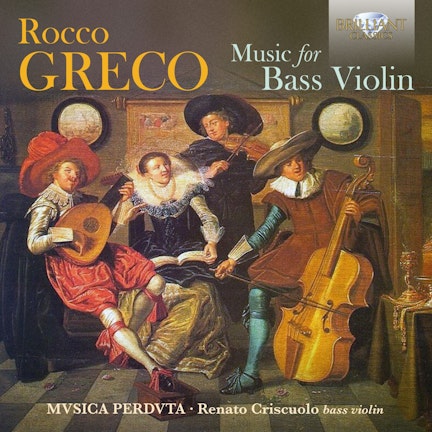
Gaetano Francone, a colleague of Rocco Greco, composed a collection of 10 short Passagagli for cello and basso continuo in an Iberian style, featuring violinistic virtuosity.
Historical Context
Naples, as a wealthy city-state and one of the most populous urban areas in 17th- and 18th-century Europe, attracted composers from across Italy and beyond.
Historical Context
The Reale cappella del Tesoro di San Gennaro, a chapel in Naples' cathedral dedicated to St. Januarius, maintained a splendid musical culture.
Composition History
The violoncello was introduced to the Reale cappella del Tesoro di San Gennaro's instrumental ensemble in 1717 by Rocco Greco, the chapel's last appointed violist.
Compositional Technique
Rocco Greco composed 11 virtuosic 'diminutions' for cello, which were elaborations of the bass parts of vocal motets based on Vespers texts.
Instruments
Both Greco's diminutions and Francone's Passagagli were designed for a four-stringed cello tuned in fifths, though some pieces required a fifth low string, indicating the viola da gamba had not yet become obsolete.
Recording & Production
This album features the first recordings of the works by Rocco Greco and Gaetano Francone.
You might also enjoy...
From Mannheim to Berlin - Sonatas for Violoncello Piccolo
Boismortier, J.: Chamber Music (Les Buffardins)
Salvatore Lanzetti: Sonatas for Violoncello Solo and Basso Continuo, Op. 1, Vol. 1
LANZETTI: Sonate a Violoncello Solo e Basso Continuo