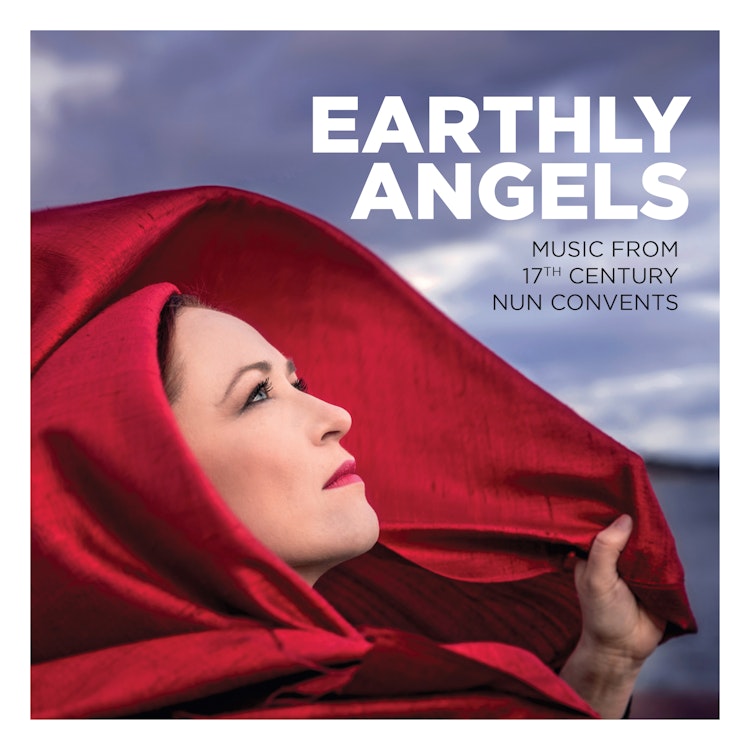
Earthly Angels: Music from 17th Century Nun Convents
3/8/2019, 8 Tracks, 56:38
Featuring
Kajsa Dahlbäck
Andrew Lawrence-King
Aira Maria Lehtipuu
Anna Villberg
Earthly Angels
Maria Xaveria Perucona
Isabella Leonarda
Claudia Francesca Rusca
Rosa Giacinta Badalla
Benedetto Rè
Chiara Margarita Cozzolani
Did you know?
1/7
Cultural Impact
Music was a suitable occupation for nuns, and two-thirds of Milan's 41 convents around 1600 practiced high-quality polyphonic music-making.
Compositional Technique
The instrumentation of the nuns' music was limited to available musicians and instruments, meaning all vocal parts, including tenor and bass, were written for female voices.
Interpretation
The early music ensemble Earthly Angels, founded by Kajsa Dahlbäck, focuses on a close, embodied relationship between text and music and finding new interesting early music repertoire.
Historical Context
As many as 75% of daughters from some aristocratic Milanese families became nuns around the turn of the 17th century.
Composer's Artistic Vision
The music of these nuns, referred to as 'earthly angels,' combined text and music in a bodily, internalized, and emotional way, representing a unique feminine voice within the Church.
Composer Biography
Chiara Margarita Cozzolani, a nun at Santa Radegonda, was praised by Filippo Picinelli as one of the finest singers in all of Italy.
Historical Context
In 17th-century Milan, it was common for girls to enter convents because families often could not afford the large dowries required for marriage.
You might also enjoy...
Nisle: Octet, Septet & Quintet
The Music of Ezra Laderman, Vol. 9
Castillon: Piano Trio No. 2, Op. 17b & Violin Sonata in C Major, Op. 6
Onslow: String Quintets, Vol. 5
Chamber Music
Wilms: Piano Quartets, Opp. 22 & 30
Five Premieres • Chamber Works with Guitar
Stamitz: Chamber Works
Guitar Evol.3ution + Orchestra
Violin Recital: Unger, Annette - Reinhold, O. / Thilmann, J.P. / Borner, H.