Edelmann believed in progress in music, instrument making, and society, championing an art that served glorified passion and constantly shifted between gloom and light.
Critical Reception
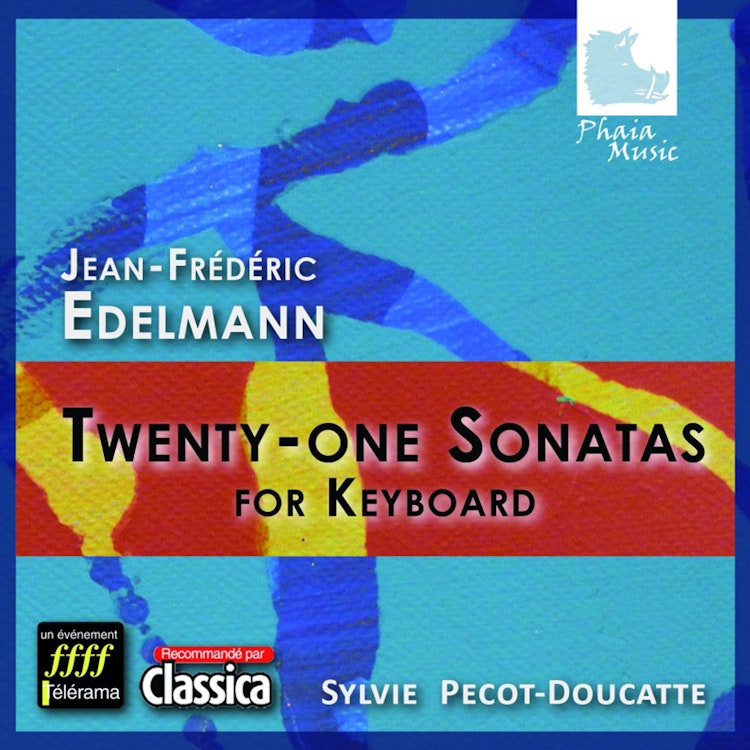
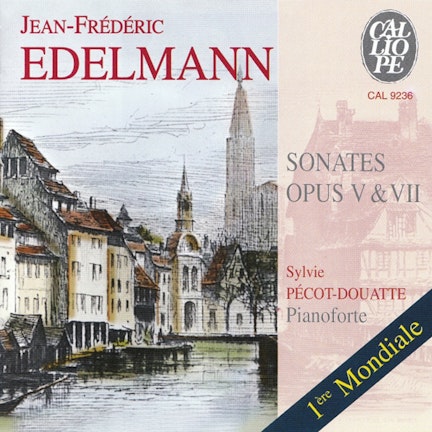
Edelmann's works fell into obscurity after the Revolution, largely due to a musicologist named Gerber, but this album aims to rehabilitate him as a precursor of Romanticism.
Compositional Technique
Edelmann used unusual keys, brought melancholy to slow movements in minor keys, and infused energy, frenzy, and drollery into his fast movements, which are sometimes exceedingly difficult.
Compositional Technique
Edelmann added an 'ad libitum' violin accompaniment to his sonatas, as it was believed at the time that this could compensate for the harpsichord's perceived 'lack of sensitivity'.
Notable Performances
In 1777, Wolfgang Amadeus Mozart played some of Edelmann's pieces 'a prima vista' (at first sight), indicating their quality and Edelmann's contemporary recognition.
Composer Biography
Jean-Frédéric Edelmann, the composer, was unjustly guillotined during the Reign of Terror, a fate he shared with his friend Frédéric de Dietrich, the mayor of Strasbourg.
Performer Biography
Sylvie Pécot-Douatte, the performer, studied harpsichord at the Paris Conservatoire and has dedicated recent years to reviving French keyboard music of the late 18th century.
You might also enjoy...
Hässler: Keyboard Sonatas
Johann Christian Friedrich Bach: Works for Keyboard Solo