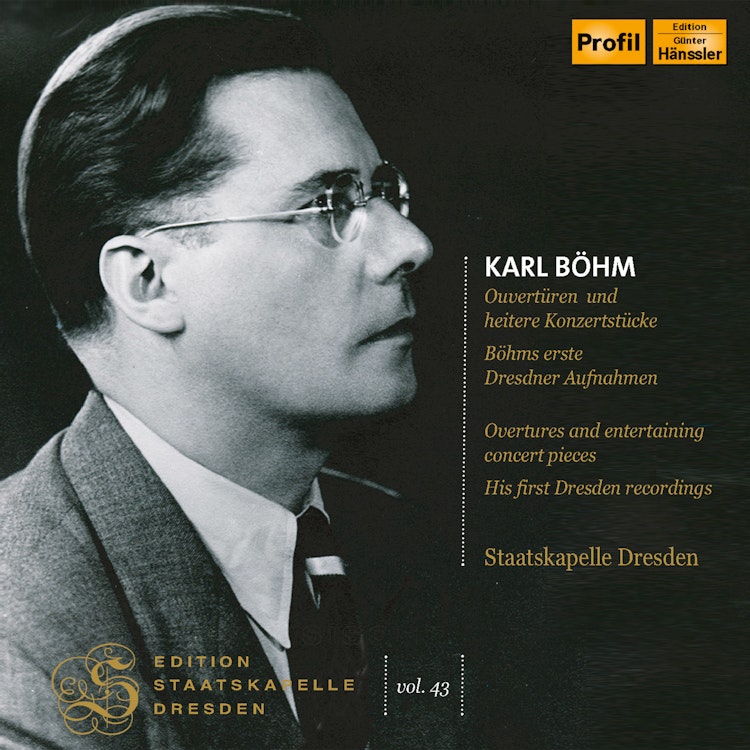
These early Electrola shellac recordings were made with only two microphones and are considered a reference for motivation and musical joy, even after careful restoration.
Historical Context
In 1935, a 30cm record cost six Reichsmark, which was a significant luxury given the average worker's monthly wage was well under 200 Reichsmark.
Performer Biography
Karl Böhm considered his time as general music director and opera director in Dresden from 1934 to be his "perhaps most fruitful period," during which his friendship with Richard Strauss deepened.
Recording & Production
These recordings were made in Dresden's Semperoper, which was adapted for use as a recording studio with microphones, sound-absorbing screens, and record-cutting equipment.
Historical Context
After the 1936 Olympic Games, all German record companies removed recordings by Jewish artists, including Leo Blech, from their catalogues, creating a large repertoire gap.
Recording & Production
Electrola's advertising for these recordings in 1935 falsely claimed they were the first by the Staatskapelle Dresden, ignoring earlier recordings from 1923 under Fritz Busch, who was expelled by the Nazis.
Performer Biography
Karl Böhm, the conductor, began his career as a rehearsal pianist at the Graz Opera and later became general music director in Darmstadt, Hamburg, and Dresden.
You might also enjoy...
Karl Böhm - The Early Years
Ride of the Valkyries - Wagner, Mozart, Beethoven, Bach, Mendelssohn