Walton's Cello Concerto uses a richer harmonic palette and a more diverse, colorful orchestra, including a vibraphone, celesta, and harp.
Performer Biography
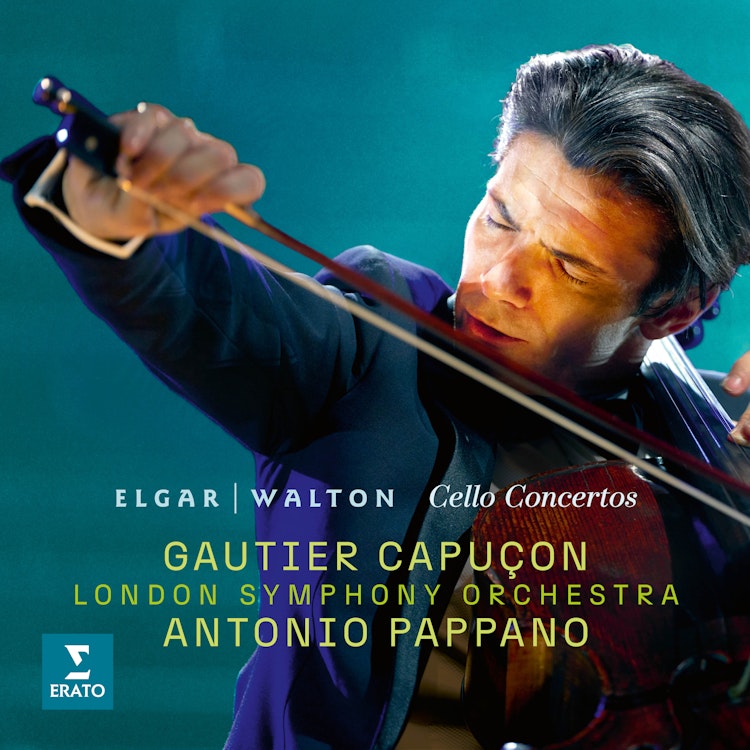
Gautier Capuçon, the cellist on this recording, has played his Matteo Goffriller cello from 1701 for over 20 years.
Composer's Artistic Vision
Antonio Pappano notes that Elgar's music, though influenced by German composers like Wagner, possesses a great nobility that went out of fashion in the early 20th century.
Interpretation
Antonio Pappano, the conductor, believes English music has much to say if performed with full intensity and drama, a quality the London Symphony Orchestra excels at.
Composition History
Elgar's Cello Concerto, his last important composition, was written mostly in 1919 after World War I, when the 61-year-old composer was ill and confronted with his own mortality.
Historical Context
This album pairs Elgar's Cello Concerto, written after World War I, with Walton's Cello Concerto, composed after World War II, reflecting English music history.
Critical Reception
The Elgar Cello Concerto was not regularly performed until the 1965 EMI recording by Jacqueline du Pré and John Barbirolli with the London Symphony Orchestra.
You might also enjoy...
Elgar, Walton: Cello Concertos (Remastered)
Elgar/Walton: Cello Concertos; Delius: Caprice and Elegy
In the Shadow of War
Earth, Sea, Air, British Music for Cello and Orchestra
British Cello Concertos
Bax - Bate: Cello Concertos
The Recovery of Paradise: Blackford Cello Concerto
Elgar: Cello Concerto in E Minor - Walton: Cello Concerto
Elgar: Cello Concerto in E Minor, Op. 85: II. Lento – Allegro molto
Elgar & Walton: Cello Concertos
Dido and Aeneas, Z. 626: When I am Laid in Earth (Dido's Lament, Arr. for Cello & Orchestra by Julian Riem)