Elgar's 'Enigma' Variations, Op 36, began as a humorous musical game where he improvised variations on a tune, each representing a friend.
Performer Biography
Keith John, the organist on this recording, is also a transcriber who has adapted several masterworks for organ, including Bach's Chaconne and Mussorgsky's Pictures at an Exhibition.
Composer's Artistic Vision
Elgar never referred to the work as the 'Enigma Variations,' preferring simply 'Variations,' possibly to avoid association with Cipriani Potter's existing 'Enigma Variations' for piano.
Composition History
Elgar's Organ Sonata, Op 28, was composed in 1895 at the request of Hugh Blair, the organist of Worcester Cathedral, for a visit by American organists.
Critical Reception
The first performance of Elgar's Organ Sonata was poorly executed by Hugh Blair, who had little time to prepare, leading to a "terrible mess" according to Rosa Burley.
Compositional Technique
The 'Enigma' Variations contain a hidden, unplayed counterpoint to the main theme, which Elgar stated was a "well-known melody which is never heard."
Instruments
The organ of The Temple Church, London, was originally built by Harrison & Harrison in 1924 for Lord Glentanar's ballroom and was moved to the church in 1954.
You might also enjoy...
Karg-Elert: Organ Works, Vols. 5 and 6
Purcell / Vaughan Williams / Howells / Edgar: The British and Canadian Music for Organ
Kee, Piet: Hindemith and Reger
Baumann: Organ Works, Vol. 2
Demessieux: 6 Études, Op. 5 & 7 Meditations sur le Saint-Esprit, Op. 6
Karg-Elert: The Complete Organ Works, Vol. 14
Mosaics in Sound
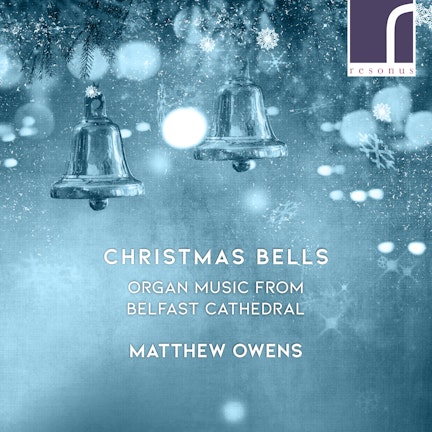
Christmas Bells: Organ Music from Belfast Cathedral