Elgar's Cello Concerto, composed in 1919, is described as a "swan-song to the world that preceded the 'Great War'" (World War I), a world lost after four years of widespread conflict.
Performer Biography
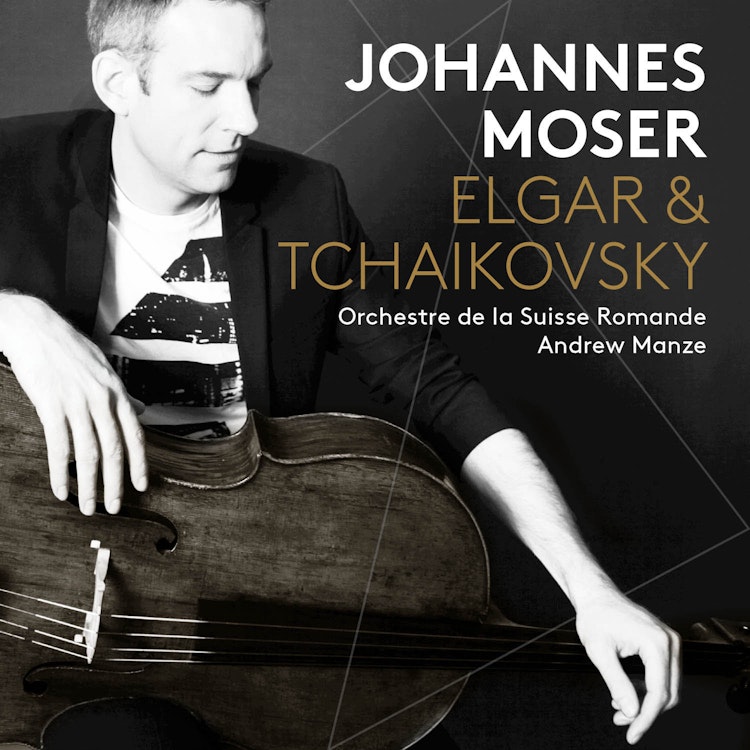
Johannes Moser, the cellist on this recording, was the top prize winner at the 2002 Tchaikovsky Competition and received a special prize for his interpretation of the Rococo Variations.
Composer's Artistic Vision
Both Elgar and Tchaikovsky, the composers on this album, looked back to a "brighter past" in their works, with Elgar lamenting the loss of Old Europe and Tchaikovsky paying homage to Mozart.
Composition History
Tchaikovsky's Rococo Variations were first published in a version significantly altered by cellist Wilhelm Fitzenhagen, to whom the work was dedicated, with unauthorized changes to the score.
Interpretation
Cellist Johannes Moser recorded the original version of Tchaikovsky's Rococo Variations and closely studied Elgar's handwritten score to get closer to the composers' intentions.
Critical Reception
The premiere of Elgar's Cello Concerto in 1919 did not lead to a breakthrough because, despite critical praise for the score, the orchestra's performance suffered from insufficient rehearsal time.
Composer Biography
The four years of World War I caused a radical change in the 62-year-old Elgar's life, leading to a subdued compositional style in his Cello Concerto compared to his earlier, more optimistic works.