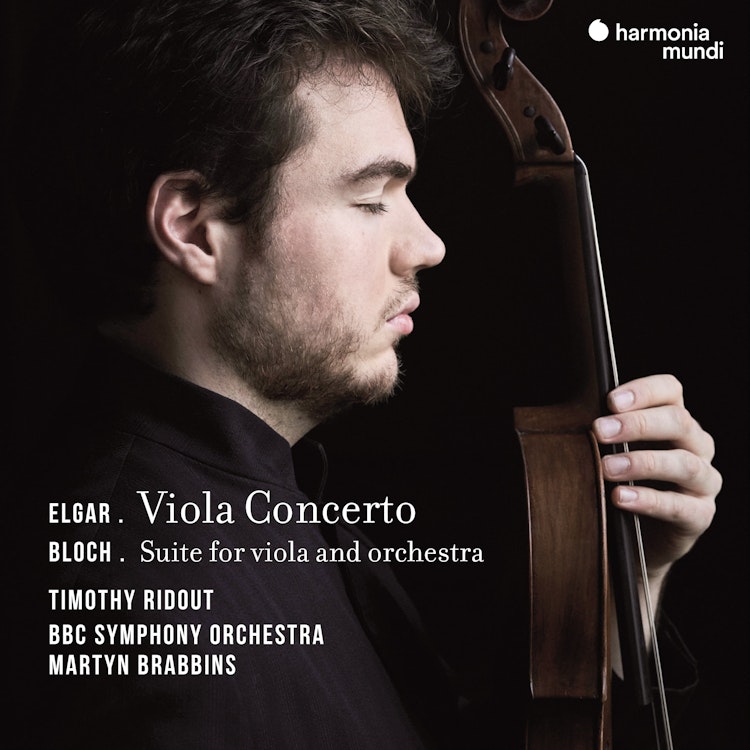
Elgar: Viola Concerto - Bloch: Suite for Viola and Orchestra
1/13/2023, 8 Tracks, 58:57
Featuring
Martyn Brabbins
Timothy Ridout
BBC Symphony Orchestra
Edward Elgar
Ernest Bloch
Did you know?
1/7
Composition History
Edward Elgar's Cello Concerto, his last major work, was completed in 1919 during a period of disillusionment for the composer, marked by his wife's terminal illness and his own ill health.
Compositional Technique
Ernest Bloch's Viola Suite features harmonic and tonal ambiguity, with the first movement leading the ear through various tonalities and modalities, including C major, a tritone, C minor, and B major.
Notable Performances
The premiere of Lionel Tertis's viola version of Elgar's Cello Concerto, with Tertis as soloist and Elgar himself conducting, was more successful than the original cello version's premiere.
Composer's Artistic Vision
Ernest Bloch, a Swiss-American composer, was known for his 'Jewish Cycle' of works, but his Viola Suite was intended as an evocation of the Orient, a culture he found fascinating.
Composition History
Ernest Bloch's Suite for viola and orchestra won first prize in the prestigious Berkshire Chamber Music Festival Competition, sponsored by Elizabeth Sprague Coolidge.
Critical Reception
The original premiere of Elgar's Cello Concerto in 1919 suffered from a 'ragged performance' due to conductor Albert Coates selfishly hogging rehearsal time, but the music's qualities were recognized nonetheless.
Interpretation
The viola arrangement of Elgar's Cello Concerto was made by violist Lionel Tertis in 1929, with the composer's approval, to expand the solo repertoire for the viola.
You might also enjoy...
Klassizistische Moderne Vol. 2: Stravinsky, Tippett, Britten
Klassizistische Moderne Vol. 2: Stravinsky, Tippett, Britten
Elgar: Caractacus / Severn Suite
Finzi: Cello Concerto - Leighton: Veris Gratia
Holst: Walt Whitman Overture - Suite de Ballet - Suite in E flat - A Hampshire Suite - A Moorside Suite
Sullivan: in Memoriam / The Tempest, Op. 1: Suite / Symphony in E Major, "Irish"