Despite her success, Emilie Mayer's career was hampered by 19th-century gender biases; the 'Neue Berliner Musikzeitung' described her as a 'rare phenomenon' in 1878, stating orchestral works were the 'Domain of the creative male intellect'.
Composer Biography
Emilie Mayer, born in Friedland, Mecklenburg, began piano and organ lessons and composed small pieces at the age of five.
Recording & Production
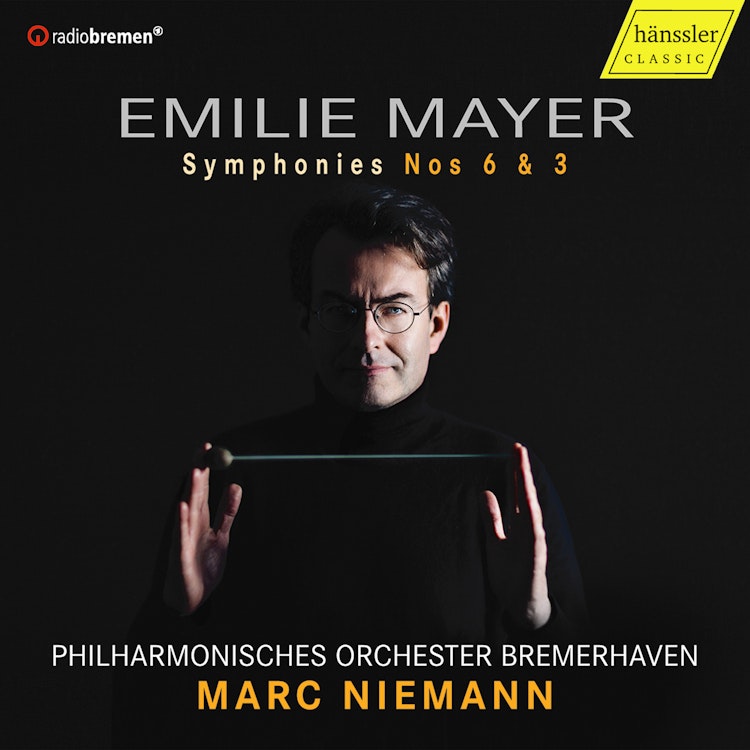
This album features premiere recordings of Emilie Mayer's Symphonies Nos. 3 and 6, performed by Marc Niemann and the Philharmonisches Orchester Bremerhaven in 2021.
Composer Biography
After her father's suicide in 1840, Emilie Mayer became financially and personally independent in her late twenties, deciding to professionalize her composing skills.
Composer's Artistic Vision
Emilie Mayer was known as the 'most successful symphonist among the composing women of the Romantic era' and was called the 'female Beethoven' by her contemporaries.
Critical Reception
After her death in 1883, Emilie Mayer, who remained unmarried and childless, was largely forgotten until her grave was designated a memorial in 2021.
Composition History
Emilie Mayer studied composition with Carl Loewe, a 'ballad king', and later advanced her studies in Berlin with Adolf Bernhard Marx, a Beethoven advocate, and Wilhelm Wieprecht, a military music specialist.