Enescu's music is described as complex, honest, and deeply human, often sounding natural and almost improvised, reflecting a submission to events rather than commenting on them.
Interpretation
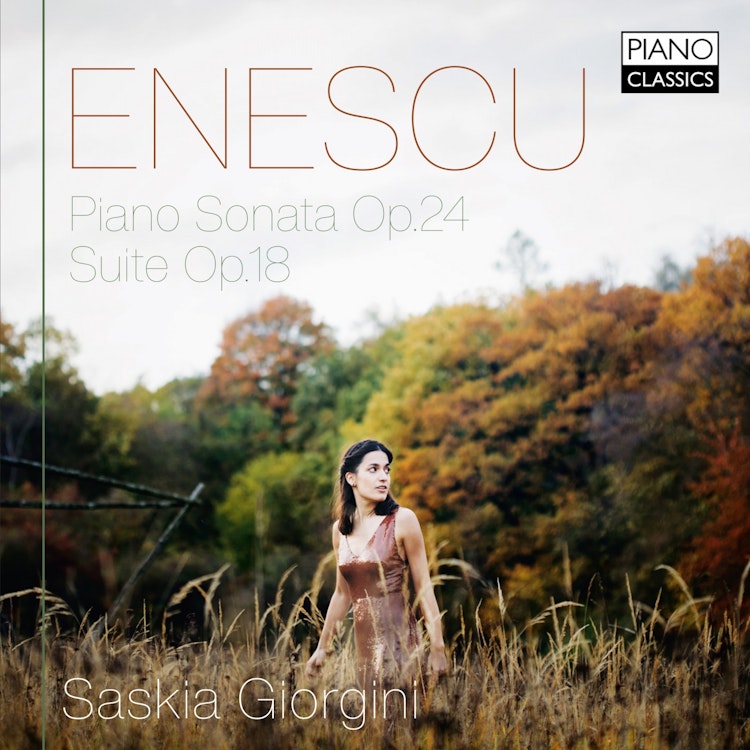
The performer, Saskia Giorgini, notes that Enescu's scores are extremely detailed with a wide range of expression and mood indications, yet they can lead to a feeling of improvisation once absorbed.
Composer Biography
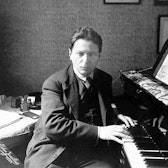
George Enescu, a highly influential musical figure of the 20th century, was not only a composer but also a violinist, a teacher to a generation of violinists, a brilliant pianist, and a conductor.
Performer Biography
Saskia Giorgini, the pianist on this album, won the International Mozart Competition in Salzburg in 2016 and has performed in major halls and festivals worldwide with renowned orchestras and chamber partners.
Historical Context
During World War One, Enescu played for wounded soldiers daily, observing music's power to uplift their spirits, which he considered the supreme raison-d'être of music.
Compositional Technique
Enescu created his own original musical language, incorporating a distinct folk character without directly quoting existing folk material, and using descriptive heterophony and polyrhythmia.
Composition History
The Piano Sonata No.3 in D, Op.24 No.3, written between 1932 and 1935, represents a culminating point in Enescu's compositions and was created during a difficult period in his life.
You might also enjoy...
Roussel & Dutilleux: Piano Works
Casadesus & Dutilleux: Selected Piano Works
Ullmann, V.: Piano Sonata No. 6 / Klein, G.: Piano Sonata / Berman, K.: Suite for Piano
George Enescu: Works for Piano
Gál: The Complete Works for Solo Piano
Lewkovitch, B.: Piano Sonatas Nos. 1 and 2 / Dansesuite No. 1
Albeniz: Piano Sonata Nos. 3, 4, 5, Suite Ancienne Nos. 1, 2
Enescu: Complete Works for Solo Piano, Vol. 2
Raff: Complete Piano Suites, Vol. 1
Piano Sonatas: Discoveries Vol. 4
Kapustin: Piano Sonatas Nos. 1 & 2; 24 Preludes in Jazz Style