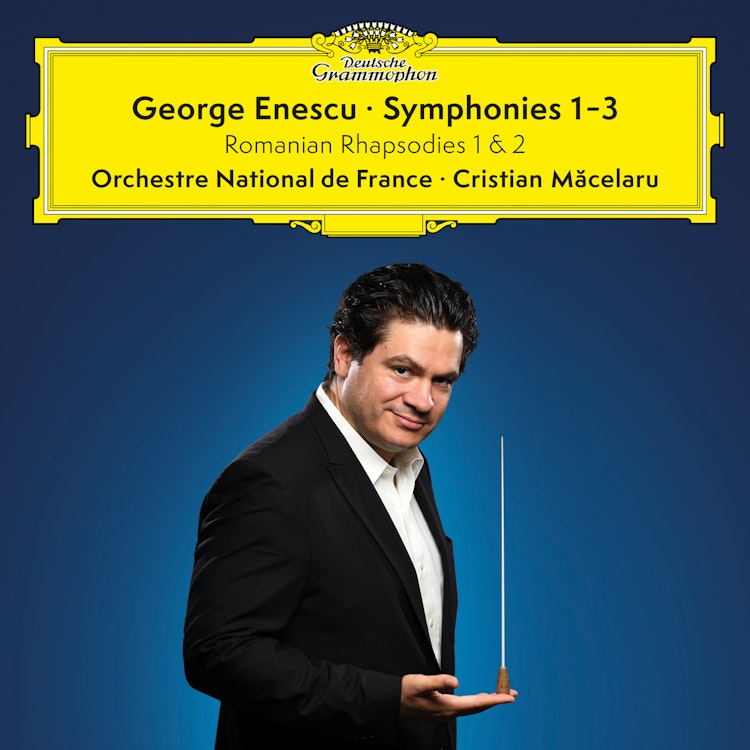
Enescu: Symphonies Nos. 1-3; 2 Romanian Rhapsodies
4/12/2024, 12 Tracks, 2:42:21
Featuring
Cristian Măcelaru
Orchestre National de France
Choeur de Radio France
George Enescu
Did you know?
1/6
Cultural Impact
The renowned violinist Yehudi Menuhin considered Enescu 'the Absolute' by which he judged other musicians, and the Belgian violinist-composer Eugène Ysaÿe dedicated his Third Sonata for Solo Violin to Enescu.
Compositional Technique
The two Romanian Rhapsodies, composed by a 19-year-old Enescu, celebrate Romania's folk-music heritage and incorporate folk songs, such as 'I have a coin and I want a drink' in the First Rhapsody.
Interpretation
The Orchestre National de France was chosen for this recording because it has kept alive the tradition of playing in the stylistic approach Enescu documented, which was natural for musicians trained at the Paris Conservatoire.
Compositional Technique
Enescu's three completed symphonies, composed between 1905 and 1918, are described as lavish orchestral tapestries that, despite using formal designs, emerge more as extended tone poems.
Composer's Artistic Vision
Enescu's music consistently refers to centuries-old Romanian melodies and rhythms, reflecting the 'longing melancholy' and 'Romanian spirit' he discovered after leaving his home country.
Composer Biography
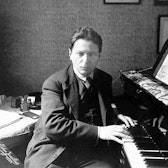
George Enescu, Romania's pre-eminent musician, was a true Renaissance man: a violinist, conductor, and teacher.
You might also enjoy...
Thomson, V.: Symphonies Nos. 2 and 3 / Symphony On A Hymn Tune