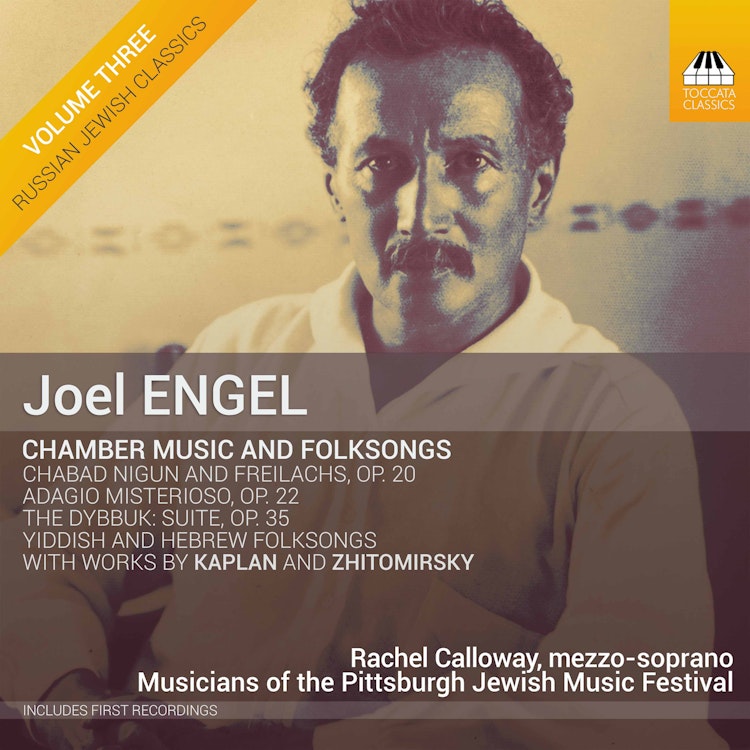
Joel Engel and playwright S. Ansky (1863-1920) used a phonograph to record Jewish villagers on wax cylinders during their 1912 ethnographic expedition, capturing musical nuances beyond written notation.
Composer Biography
Pyotr Ilyich Tchaikovsky was reportedly impressed by Joel Engel's musical talent and encouraged him to pursue composition full-time.
Composer's Artistic Vision
Joel Engel was inspired by art-critic Vladimir Stasov (1824-1906) to incorporate Jewish folk-music into his compositions, leading to his pioneering ethnomusicological expeditions.
Historical Context
In Tsarist Russia, Jews faced severe restrictions, including being confined to a small area called the 'Pale of Settlement' and oppressive taxes and conscription.
Composer Biography
Joel Engel (1868-1927), a Russian composer, is considered the first Jewish ethnomusicologist for his work collecting Jewish folksongs in Ukrainian shtetls.
Composer Biography
Joel Engel's privileged background allowed him to live outside the Pale of Settlement and receive a secular education, unlike most Jews of his time.
Cultural Impact
Joel Engel composed the incidental music for S. Ansky's play The Dybbuk, which became the most famous Yiddish play in history.
You might also enjoy...
Grétry: Airs & Ballets
Donaueschinger Musiktage 2014
Mendelssohn, Fanny: Vocal Music
The Angels Bowed Down: African America Spirituals (Live)
The Hungarians: From Rózsa to Justus
Renaissance Music (Instrumental and Vocal) - Le Roy, A. / Praetorius, M. / Bassano, G. / Phalese, P. (La Rocque' N' Roll)
21207
Renderings - A Musical Landscape for Violin and Harp
Pieces of Africa
Bizet, Mozart & Mendelssohn: Opernboogie
O tu chara sciença: La musique dans la pensée médiévale
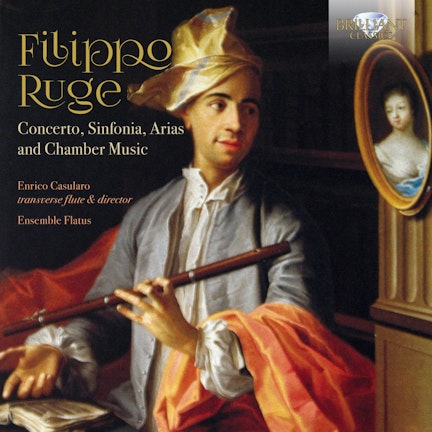
Ruge: Concerto, Sinfonia, Arias and Chamber Music
Terpsichore: Renaissance and Early Baroque Dance Music
Le roman des lumières: Chansons dans le roman français