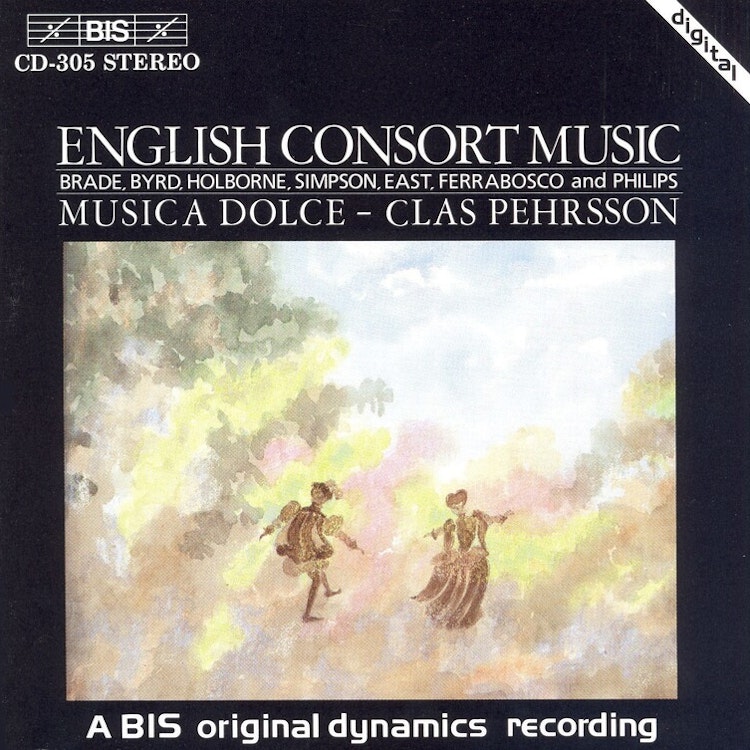
While originally intended for string ensembles, 17th-century audiences would not have been surprised to hear this music played on recorders, as instrumentation was often flexible.
Compositional Technique
The English consort music on this album incorporates melodies, rhythms, and thematic fragments from diverse musical worlds, including folk songs and church motets.
Composer Biography
William Brade, a violinist, and Thomas Simpson, a gamba-player, were English string musicians who worked on the continent, complementing German city pipers' dance repertoire with English-style pieces.
Composer's Artistic Vision
Anthony Holborne's music often reflects the spontaneity and humor of the stage, preferring slightly simpler and less elaborately sophisticated settings than his contemporaries.
Performer Biography
Clas Pehrsson, the director of Musica Dolce, is self-taught on the recorder, his principal instrument, but studied early music performance with Ferdinand Conrad, Hans-Martin Linde, and Nicolaus Harnoncourt.
Historical Context
Seventeenth-century English consort music, instrumental music for a small chamber ensemble, was a unique and sophisticated art form that spread rapidly across Europe.
Compositional Technique
Michael East's five-part "Desperavi" is the first of eight pieces in a unique suite that mirrors the soul's conversion from despair and sin through faith to triumph and eternal love.
You might also enjoy...
Chorissimo! Christmas
Cecus: Colours, blindness and memorial
Tänze der Renaissance
Morricone, E.: 4 Pictures From New York / The Mission / Sean Sean / My Heart and I / Rota, N.: 8 1/2 / Amarcord / La Dolce Vita
Venezia stravagantissima
Ludwig Senfl
In Dreams Awake
Iskra
Wind Quintet Arrangements - Mozart, W.A. / Gershwin, G. / Bach, J.S. / Stravinsky, I. / Macdowell, E. / Rimsky-Korsakov, N.A.
O Rosa Bella - English & Continental Music From The Late Gothic Period