The 20th-century evolution of percussion music was significantly influenced by John Cage's concept of 'time' as the fundamental principle of composition and Edgard Varèse's use of combination tones on untuned percussion.
Composition History
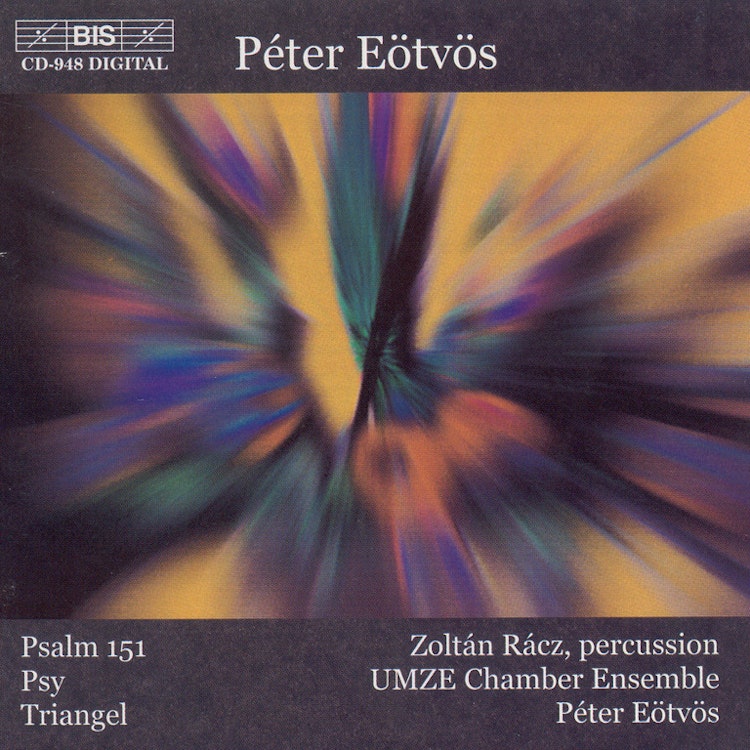
Psalm 151, a ritual piece on this album, was written in memory of Frank Zappa and is described as a protest or a psalm that calls to account.
Interpretation
The soloist in Triangel has creative freedom, including selecting instruments best suited to their sound world and 'composing' certain movements through reactive decision-making rather than pure improvisation.
Compositional Technique
In the piece Triangel, the soloist acts as a 'master drummer' in the African style, leading and interacting with the other instrumental groups, which function as a 'choir' that reacts and responds.
Performer Biography
Zoltán Rácz, the percussionist on this album, founded the Amadinda Percussion Group in 1984 and has been a professor at the Ferenc Liszt Music Academy since 1990.
Recording & Production
This recording uses close microphone positions to capture sounds normally heard by the performers, not the audience, in a concert hall, offering listeners a 'new' sonic experience.
Historical Context
Percussion instruments largely disappeared from European written music from the Middle Ages until the 20th century, as they were considered 'coarse' or 'vulgar' by church and court music traditions.