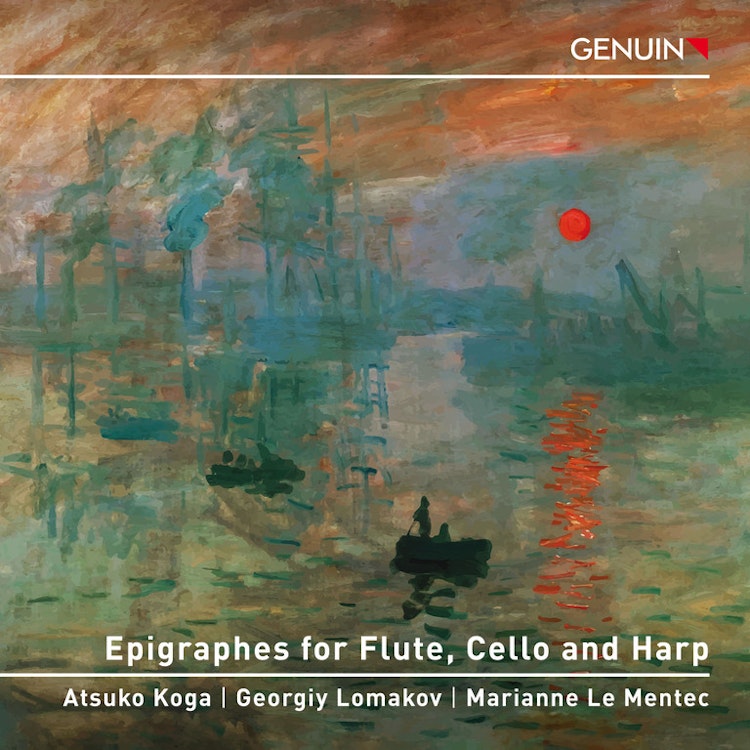
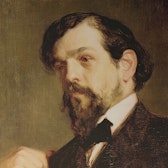
Claude Debussy planned to compose six sonatas towards the end of his life, but only three were completed.
Composer Biography
André Caplet, a composer whose talent was highly regarded by Debussy, created works shadowed by melancholy, likely due to his exposure to poison gas in World War I.
Composition History
Claude Debussy's 6 Épigraphes antiques, originally incidental music for a pantomime in 1900, was reworked by the composer in 1914 for piano duet or solo.
Composer's Artistic Vision
Tōru Takemitsu, a composer, was strongly influenced by Debussy's style, which evokes the feeling of the breath of nature.
Composition History
Claude Debussy's Syrinx was composed for the reed pipe (solo flute) played by Pan in the final scene of Gabriel Mouret's dramatic poem Psyché.
Compositional Technique
Fuminori Tanada, a composer and pianist who is a professor at the Paris Conservatoire National Supérieur de Musique, arranged Debussy's 6 Épigraphes antiques for flute, cello, and harp.
Performer Biography
Atsuko Koga, a concert flutist, won first prize in chamber music for her duo with harpist Marianne Le Mentec.
You might also enjoy...
Nordheim: Response / Tanaka: 2 Movements for Marimba
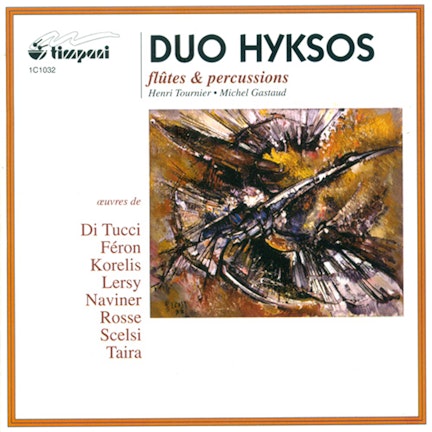
Scelsi, G.: Hyxos / Naviner, J.-Y.: D'Une Pluie La Couleur / Korelis, P.: Cronos Ii / Lersy, R.: A La Memoire De Chagall
Delicate Fires
Aleph
Between the Shore and the Ships
Wiesler, Manuela: Small Is Beautiful - Short Pieces for Solo Flute
Kompositionen von Bialas, Denhoff, Hildemann, Stahmer und Zimmermann