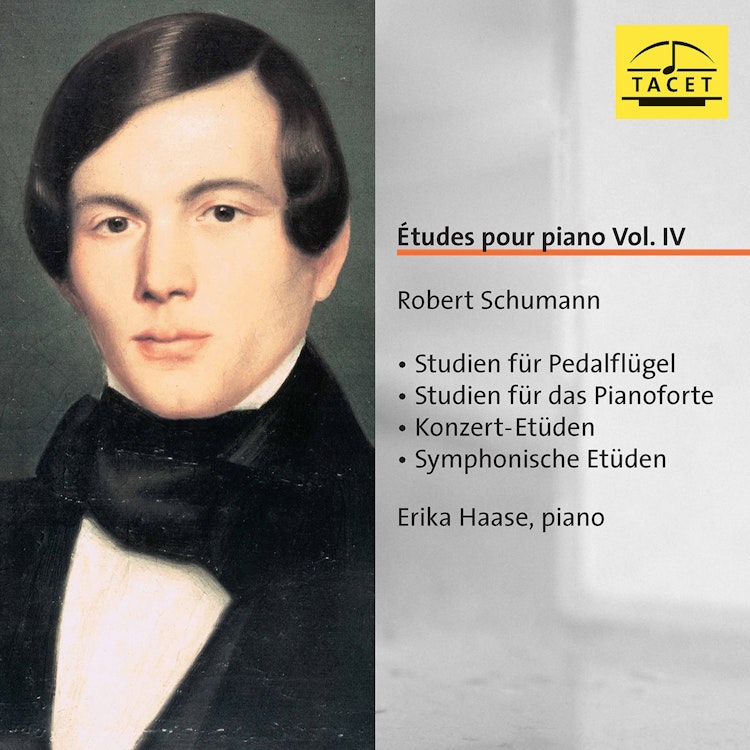
Schumann's Symphonic Etudes, Op. 13, are unique for blending elements of concert etudes and a theme and variations structure, with the theme provided by Baron von Fricken, the adoptive father of Schumann's fiancée.
Composition History
Schumann composed 18 studies for the Symphonic Etudes, Op. 13, but only selected 12 for the first edition; the remaining five completed studies were published posthumously in 1873 at the initiative of Johannes Brahms.
Cultural Impact
Claude Debussy arranged Schumann's Six Studies for the Pedal Piano, Op. 56, for two pianos in 1891, likely for Nadejda von Meck, Tchaikovsky's patroness, highlighting Schumann's influence in France and Russia.
Composition History
Schumann's Six Studies for the Pedal Piano, Op. 56, were composed after he rented a pedal-board, an organist's practice aid, and was inspired by the expanded tonal range it offered.
Composition History
Schumann gave up his ambition to be a virtuoso pianist after realizing he wouldn't acquire the necessary skills, deciding instead to found a musical periodical and focus on composing.
Compositional Technique
The 'symphonic' in Schumann's Symphonic Etudes, Op. 13, indicates that they are a cohesive whole, not individual pieces, and that their sequence resembles a symphony's structure.
Composer Biography
Robert Schumann, at age 20, first heard the virtuoso violinist Niccolò Paganini in 1830, an experience that deeply influenced his compositions.
You might also enjoy...
Symphonic Etudes, Op. 13: Etude V - Var. IV. Scherzando
Schumann: Piano Music, Op. 14, 3, 10
Bach-Liszt and Russian Music
Balakirev, Borodin & Glazunov: Piano Works
Alexey Trushechkin: The Piano Sonatas of Schumann and Scriabin - From the Dawn to the Dusk of Romanticism
Schumann: Piano Music, Vol. 5
D'Indy: Piano Sonata & Magnard: Promenades
Schumann: Works Inspired by Clara Wieck. Impromptus, Op. 5 & Piano Sonata No. 3, Op. 14