Eugen d'Albert: Works for Cello, Piano & Orchestra
4/28/2015, 16 Tracks, 2:19:45
Featuring
Ronald Zollman
Karl-Andreas Kolly
Antônio Meneses
Orquesta Sinfónica de Barcelona y Nacional de Cataluñya
Sinfonieorchester Basel
Eugen d'Albert
Did you know?
1/7
Composer Biography
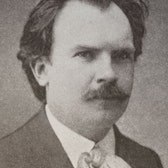
Eugen d'Albert, born in Glasgow, was a piano prodigy as a child, with Anton Rubinstein and Clara Schumann predicting his worldwide fame.
Critical Reception
The Viennese music critic Julius Korngold noted with 'some bitterness' that the world treated Eugen d'Albert unkindly, struggling to accept him as both a great pianist and a serious composer.
Composition History
Eugen d'Albert composed his 'first' Piano Concerto in B minor, Op. 2, in 1883 at the invitation of piano manufacturer Bechstein and dedicated it to his mentor, Franz Liszt.
Composer Biography
Two artists who profoundly influenced Eugen d'Albert throughout his life were Franz Liszt, who perfected his piano talent, and Johannes Brahms, who valued him as an interpreter of his own works.
Compositional Technique
Eugen d'Albert's Cello Concerto in C major, Op. 20, shows the influence of Johannes Brahms, particularly in its instrumentation, which emphasizes dialogue between the solo string instrument and solo woodwinds.
Composition History
Eugen d'Albert's Symphony in F major, Op. 4, his only contribution to the symphonic genre, was championed by Hans von Bülow, who rehearsed it with the Berlin Philharmonic Orchestra in 1892.
Cultural Impact
Despite composing twenty operas, numerous songs, and instrumental works, only Eugen d'Albert's opera Tiefland (1903/1905) remains in the repertoire today.
You might also enjoy...
Flagello: Piano Concertos Nos. 2 and 3 / Credendum
El-Khoury: Meditation Poetique / Piano Concerto / Poems Nos 1 and 2
Headley: California Suite / Piano Concertos Nos. 1 and 2 / Symphony No. 1
Falla, Guridi, Milà & Turina: Orchestral Works
Englund, E.: Piano Concertos Nos. 1 and 2 / Epinikia
Kabalevsky: Colas Breugnon: Overture / Piano Concerto Nos. 2 and 3 / The Comedians
Rachmaninov: Complete Symphonies & Piano Concertos