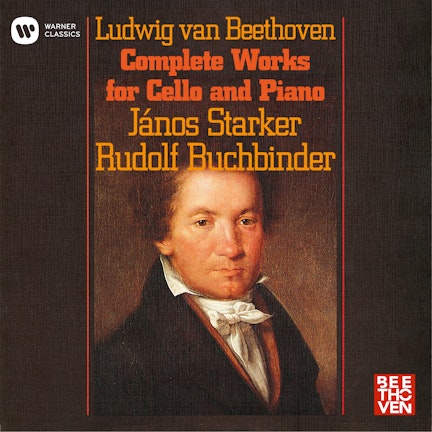
Beethoven's Op. 102 Sonatas were composed in 1815, at the end of a relatively infertile creative period for the composer, during which his catalogue was scarcely enriched for almost four years.
Instruments
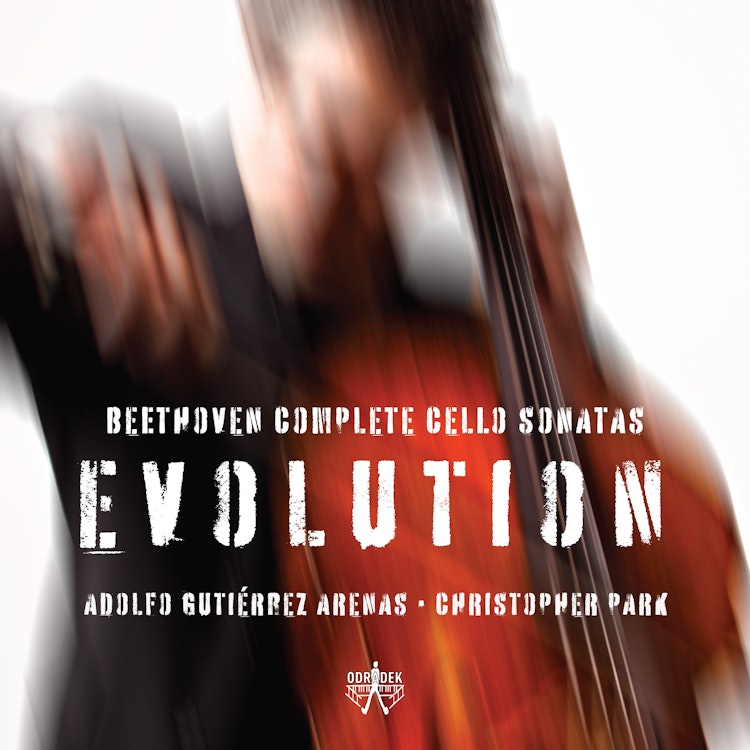
Adolfo Gutiérrez Arenas, the cellist on this recording, plays a cello made by Francesco Ruggieri in Cremona in 1673.
Interpretation
The performers, Adolfo Gutiérrez Arenas and Christopher Park, aimed to reflect the brutally changing emotions in Beethoven's music, from its classical beginnings to the musical metaphysics of his later works.
Composition History
Beethoven's Op. 5 Cello Sonatas maintain an indirect connection with musical classicism creators, as they were composed during his time at the Berlin court of Frederick William II of Prussia, a notable cellist and dedicatee of works by Haydn and Mozart.
Compositional Technique
Beethoven's Op. 5 Sonatas are of unusual scale, with the G minor Sonata having no fewer than 553 bars, suggesting a more concertante than chamber spirit.
Instruments
The cello endpin was not introduced until the mid-19th century, and the fortepiano was in a state of permanent metamorphosis during Beethoven's time, meaning neither instrument had the sonorous power they do today.
Historical Context
When Beethoven traveled to Berlin in 1796, Mozart had died and Haydn was the most famous composer in Europe.
You might also enjoy...
Beethoven: The Sonatas for Piano and Cello
Beethoven: Complete Sonatas for Cello & Piano
Beethoven: Sonatas for Cello and Piano Nos. 1–5
Beethoven The complete sonatas for piano and cello
Beethoven: Cello Sonatas Nos. 1-5
Beethoven: Cello Sonatas Nos. 1-5
Beethoven - The Sonatas for Piano and Violoncello
Beethoven: 5 Sonatas for Cello & Piano
Beethoven: Complete Cello Sonatas
Beethoven: Complete Works for Cello & Piano
Beethoven: Complete Works for Cello and Piano
Beethoven, L. Van: Cello Sonatas Nos. 1-5 / 12 Variations / 7 Variations (The Complete Works for Cello and Piano)
Ludwig van Beethoven: The Complete Works for Violoncello