Robert Schumann, a contemporary composer, reviewed Felix Mendelssohn's Psalm 42 with "verbal exuberance and unreserved admiration," calling it the highest level attained by modern sacred music.
Composition History
Felix Mendelssohn's oratorio Christus, left unfinished at his death, was intended to be part of a trilogy uniting the Old and New Testaments with his completed oratorios Paulus and Elias.
Composition History
Fanny Hensel's cantata Lobgesang was completed in June 1831 to celebrate the first birthday of her son, Sebastian, and uses the metaphor of childbirth to express pain turning into joy.
Historical Context
Felix Mendelssohn's career, spanning from the Congress of Vienna in 1815 to the Revolutions of March 1848, was deeply intertwined with the political and religious divisions of Germany.
Critical Reception
Fanny Hensel's impressive and mature music remains overshadowed by her famous brother's work, likely due to centuries of one-sided music historiography that confined women to piano playing rather than composing.
Composer Biography
Felix Mendelssohn and his sister Fanny Hensel (born Mendelssohn) received nearly identical musical training and shared a close relationship, with Felix promoting Fanny's pianistic talent and considering her compositional ambitions.
Composer's Artistic Vision
Felix Mendelssohn believed his church music should convey certainty of belief and be a confession of faith, not merely decorative or subordinate to the liturgy.
You might also enjoy...
Mendelssohn: Complete Sacred Choral Works, Vol. 1
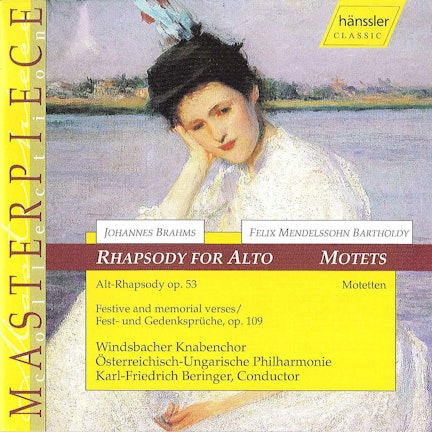
Brahms: Rhapsody for Alto - Mendelssohn: Motets
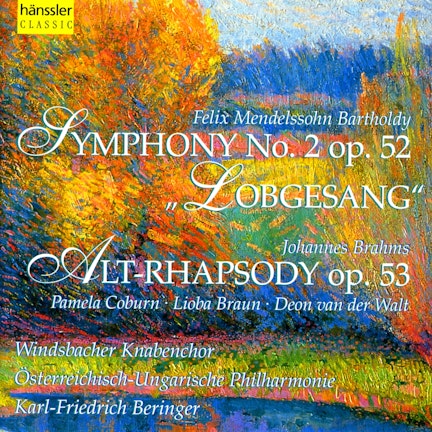
Mendelssohn: Symphony No. 2, Op. 52, "Lobgesang"
Gillian Weir - A Celebration, Vol. 10 - Mendelssohn, Kodaly: Choral Music
Mendelssohn, Felix: Church Music, Vol. 6 - Psalm 115 / O Haupt Voll Blut Und Wunden / Wer Nur Den Lieben Gott Lasst Walten
Mendelssohn: Verleih uns Frieden. Kirchenwerke VI
Rheinberger & Mendelssohn: Choral Works
Motets of the Romantic Era
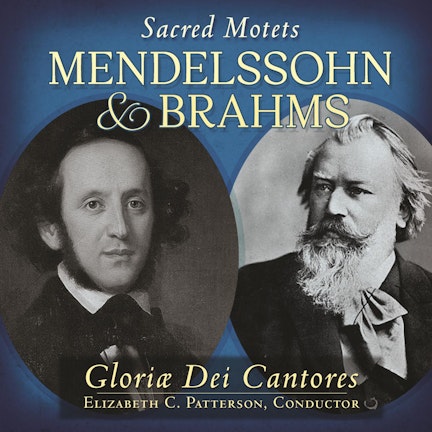
Mendelssohn & Brahms: Sacred Motets
Mendelssohn: Motets & Piano Trio
Mendelssohn, Felix: Church Music, Vol. 7 - 2 Sacred Choruses / 3 Motets / Herr, Sei Gnadig / Trauer-Gesang / Te Deum
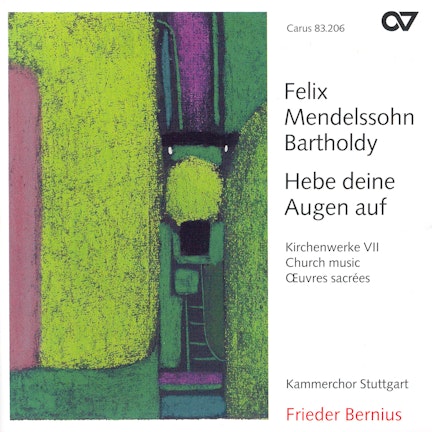
Mendelssohn: Hebe deine Augen auf. Kirchenwerke VII