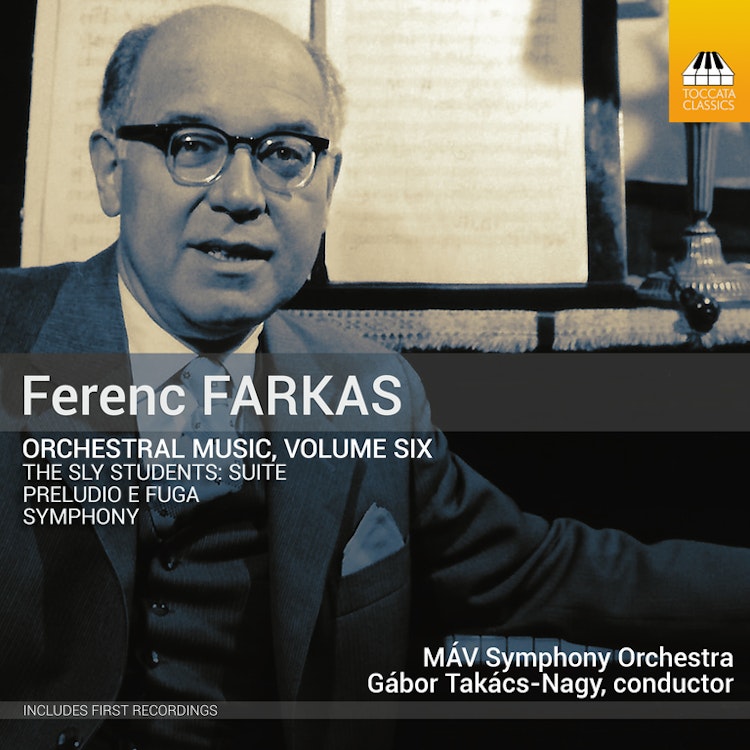
Ferenc Farkas experimented with twelve-note themes and dodecaphonic technique in the 1930s and 1940s, but he used a freer, Latin version of it, prioritizing traditional beauty over strict rules.
Composer Biography
Ferenc Farkas succeeded Zoltán Kodály and Sándor Veress as a composition teacher at the Budapest Academy of Music in 1949, where he taught for 25 years, with György Ligeti and György Kurtág among his students.
Composer Biography
Ferenc Farkas, the composer, had a long and active life, creating such a large and complex body of work that it could be attributed to several different composers.
Critical Reception
Despite an enthusiastic audience, Farkas's Symphony was criticized by some for not sufficiently capturing the required ideological content, leading him to withdraw the piece after a few performances.
Composer's Artistic Vision
Farkas embraced diverse musical styles, sometimes referring to his role model, the poet Fernando Pessoa, who published under four different names, and used 'masks' in his own compositions.
Performer Biography
Gábor Takács-Nagy, the conductor, is a founding member and former leader of the acclaimed Takács Quartet and has been Music Director of the Verbier Festival Chamber Orchestra since 2007.
Composition History
Farkas's Symphony, subtitled 'In memoriam 4. IV. 1945', was written in 1952 under Soviet political pressure for Hungarian composers to create accessible, optimistic pieces with programmatic content.