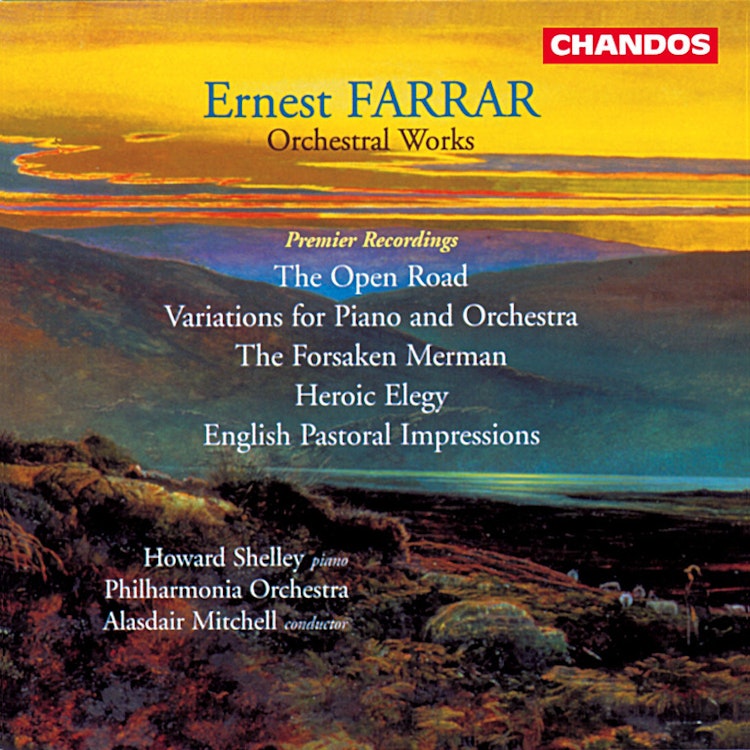
Ernest Farrar voluntarily enlisted in the Grenadier Guards in December 1915 and was killed in action on September 18, 1918, leading his men in the Battle of Epéhy Ronssoy.
Composer Biography
Ernest Farrar, an exact contemporary of George Butterworth, was considered one of the most promising composers of his generation before his death in World War I.
Recording & Production
The full scores of four of Farrar's works for voices and orchestra are missing, and new material for this recording was commissioned by the R.V.W. Trust based on manuscripts in the Bodleian Library.
Composition History
Farrar's teacher, Sir Charles Stanford, and Sir Hubert Parry, both prominent figures in British music, furthered his early career by recommending him for organist positions.
Critical Reception
Despite efforts by his teacher Sir Charles Stanford and his widow, Farrar's music fell into neglect after his death, with no major recordings until this album.
Cultural Impact
Farrar's untimely death prompted musical tributes from close friends, including Frank Bridge, who dedicated his 1924 Piano Sonata to him, and Gerald Finzi, who wrote his Requiem da camera 'in memory of E.B.F.'.
Performer Biography
Howard Shelley, the pianist on this recording, began his career in 1971 and has performed and recorded complete cycles of Rachmaninov's solo piano works and concertos.
You might also enjoy...
Wada / Ifukube / Toyama: Japanese Orchestral Music
Josephs: Symphony No. 5, "Pastoral" - Variations on a Theme of Beethoven - Requiem
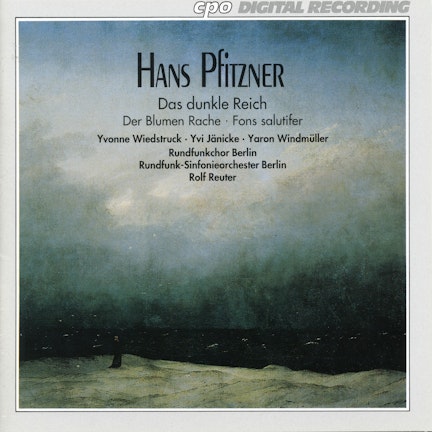
Pfitzner: Das dunkle Reich, Op. 38
Tobias Broström: Kaléidoscope
Music from 6 Continents (1998 Series)
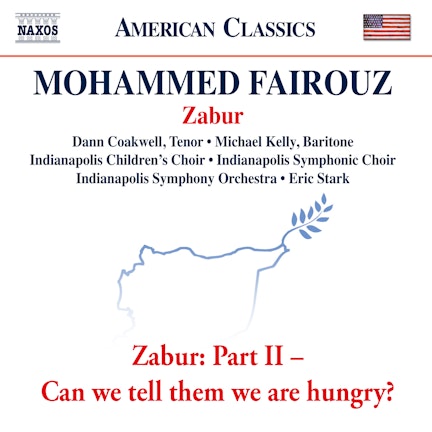
Mohammed Fairouz: Zabur, Pt. 2: Can We Tell Them We Are Hungry?
Hersch: Images From a Closed Ward
Wilson: Silhouette with Revelry
Rubin: Symphony No. 4 "Dies Irae"
Kevin Puts: Aria
Shepherd: On a Clear Day, Part II: X. Very slow, dreamy
Zhukov: Concerto Mystery & Concerto Grosso
Abendlied, Op. 85, No. 12 (Arr. for String Orchestra by Johan Svendsen)