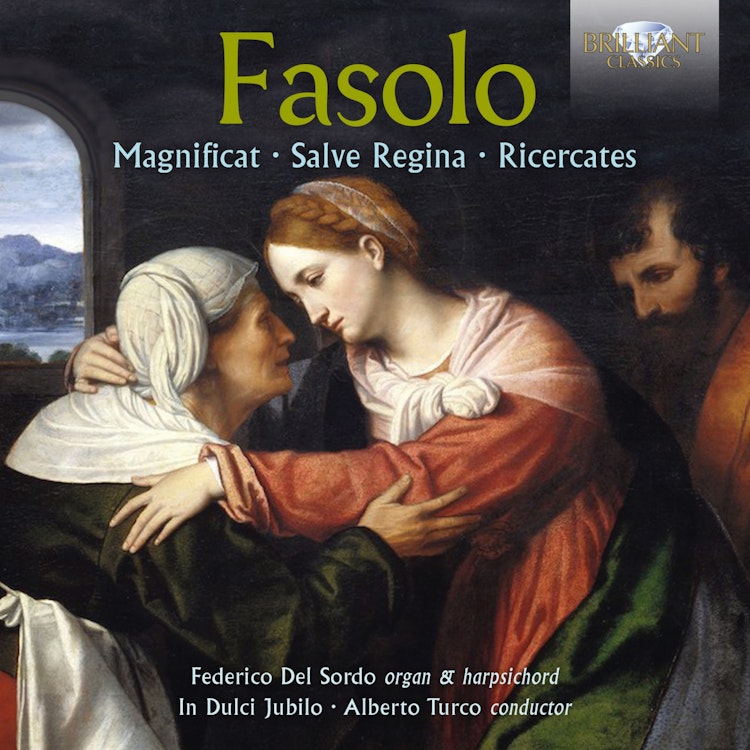
Giovanni Battista Fasolo, the composer, spent time in Rome, Naples, and Monreale in Sicily, where he served as chapel master of the Cathedral.
Interpretation
For this recording, some of Fasolo's Ricercates, Canzon Quarta, and two Fugues are played on the harpsichord to enrich the sound, reflecting historical evidence of harpsichord use in liturgical settings.
Instruments
The recording features two historic organs: the Antegnati organ (c. 1589) in Verona Cathedral and the organ at Trevi in Umbria, built in 1509 by Paolo Pietro da Montefalco, which is recognized as one of the earliest organs in the world.
Performer Biography
In Dulci Jubilo is a women's choir that has focused for thirty years on interpreting Gregorian and Ambrosian chant and other early monadic music, performing widely across Italy and Europe.
Compositional Technique
Fasolo's Magnificats strictly adhere to the liturgical canons established by the Cæremoniale Episcoporum, providing six versets for each, ordered by the "Octo Ecclesiastici Toni."
Composition History
Giovanni Battista Fasolo's most important work, the Annuale, was likely compiled much earlier than its 1645 publication date, possibly before 1635.
Historical Context
The delay in publishing Fasolo's Annuale may have been due to Alessandro Vincenti, its publisher, prioritizing Frescobaldi's Fiori musicali after reopening his printing works post-plague epidemic (1630-1632).
You might also enjoy...
Merulo: O virgo justa
Rameau: Six Concerts en Sextuor
Willaert: Musica Nova
Migali: Sonate, Op. 1
Isabel I, Reina De Castilla
Romantic Music for Oboe, Bassoon and Organ
Hotteterre, J.: Chamber Music
Valeri: Organ Works
Ein musikalisches Gipfeltreffen
Praise the Lord: Luthers Lieder auf dem Weg in die Welt
Praise the Lord. Luthers Lieder auf dem Weg in die Welt
Seraph
Euch ist ein Kindlein heut geborn. Luthers Weihnachtslieder in Sätzen aus der Reformationszeit