Soprano Barbara Hendricks discovered chamber music and French 'Mélodies' in 1968 at the Aspen Festival and Music School, where she studied with Jennie Tourel and Madeleine Milhaud, wife of composer Darius Milhaud.
Composition History
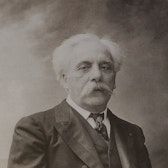
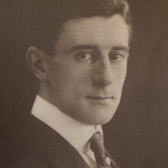
Maurice Ravel studied composition with Gabriel Fauré at the Conservatoire de Paris, carrying on the tradition of French 'Mélodies' established by his professor.
Composer's Artistic Vision
Barbara Hendricks felt an immediate connection to Gabriel Fauré's musical language, comparing his role in French 'mélodie' to Franz Schubert's role in German 'Lieder'.
Composition History
Ravel's Trois Poèmes de Stéphane Mallarmé were composed in 1913 after he discovered Arnold Schoenberg's Pierrot Lunaire, inspiring Ravel to use a similar instrumental grouping.
Compositional Technique
French song, or 'mélodie', which flourished around 1870, is characterized by a sophisticated interplay between text and music, supported by expressive harmony.
Performer Biography
Barbara Hendricks considers chamber music her musical home, an experience she first had as a young professional in 1974 at the Festival di Due Mondi with musicians like Richard Stoltzman, Peter Serkin, and Yo-Yo Ma.
Composition History
Ravel's Chansons madécasses were commissioned by Elizabeth Sprague-Coolidge, an American patron of Ravel, who specified the unusual instrumentation of voice, flute, cello, and piano.