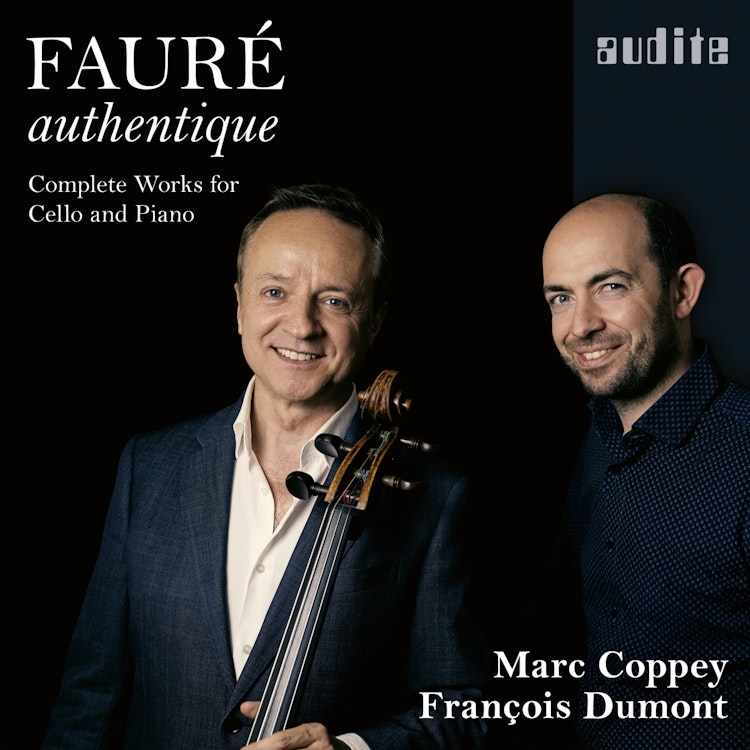
The Élégie, Op. 24, was originally conceived in 1880 as the middle movement of a planned cello sonata, but became popular as a solo piece, delaying Fauré's return to cello sonatas for almost four decades.
Performer Biography
Marc Coppey, the cellist on this recording, was a protégé of Lord Yehudi Menuhin and Mstislav Rostropovich, and won First Prize at the prestigious Leipzig Bach Competition at age 18.
Composer's Artistic Vision
Gabriel Fauré's music is characterized by clear formal conception, free melodic treatment, and new, unpredictable harmonies, often inspired by modal tonalities of early church music.
Composer Biography
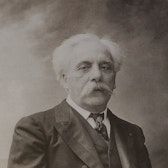
Fauré, fleeing an unhappy marriage, became a 'party animal' in Parisian high society during the 1880s and 1890s, moving in the same circles detailed in Marcel Proust's novels.
Instruments
This album features an 1891 Érard grand piano from the Musée de la musique, tuned to A = 435 Hz, which Fauré particularly loved for its colorful range, rich overtones, and clear bass register.
Cultural Impact
Marcel Proust, in his novel In Search of Lost Time, described a 'petite phrase' from a violin sonata by the fictional composer Vinteuil, which musicologists believe perfectly describes the character of Fauré's music.
Historical Context
Fauré completed his First Cello Sonata in D minor in 1917, during World War I, a period of extreme productivity for the composer despite the global political catastrophe and his failing health.
You might also enjoy...
Songs for a New Century
Mendelssohn, Butilleux, Janáček & Beethoven: Works for Cello