Faure: La Bonne Chanson, Op. 61 & Quatuor avec piano, Op. 15
4/1/2013, 13 Tracks, 53:27
Featuring
Johan Farjot
Geneviève Laurenceau
Antoine Pierlot
Arnaud Thorette
Karine Deshayes
Maud Lovett
Yann Dubost
Ensemble Contraste
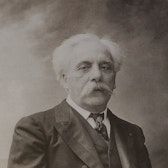
Gabriel Fauré
Did you know?
1/7
Composition History
Fauré's song cycle 'La Bonne Chanson' was inspired by his relationship with Emma Bardac, a woman of society with a special interest in music, to whom the cycle was passionately dedicated.
Composition History
The original finale of Fauré's First Piano Quartet was destroyed and replaced in 1883, with the new version performed publicly in 1884.
Historical Context
The composition of Fauré's Piano Quartet op.15 was influenced by the renewal of chamber music in France during the Third Republic, encouraged by the Société Nationale de Musique (SNM), an organization founded to promote new French music.
Composer Biography
Fauré stated that before 1870, he wouldn't have considered composing a sonata or quartet because there were no opportunities for young musicians to have such works performed.
Composer's Artistic Vision
Fauré's works generally tend towards subdued moods or melancholy, but the two masterpieces on this album, the Piano Quartet op.15 and La Bonne Chanson, stand out for their optimism and sonic richness.
Recording & Production
This Fauré album is the fourth release by Ensemble Contraste, an ensemble known for its original programming ranging from classical to jazz and contemporary music.
Cultural Impact
The Adagio movement of Fauré's Piano Quartet op.15 served as one of the models for Vinteuil's septet in Marcel Proust's novel 'La Prisonnière'.