The album features a Gaveau grand piano from 1929, which represents the pinnacle of French piano manufacturing and is one of the last concert pianos made in France in the 20th century.
Composer Biography
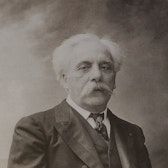
Gabriel Fauré, a pupil of Saint-Saëns, was an outstanding pianist who particularly enjoyed accompanying choruses, mélodies, and lieder.
Recording & Production
This recording is part of a series by the Philharmonie de Paris and harmonia mundi, which aims to highlight the prestigious collection of historical instruments housed at the Museum of Music.
Composer's Artistic Vision
Fauré's nocturnes, while influenced by Chopin, moved away from Romantic night and Bellinian bel canto, instead exploring a fin-de-siècle expressiveness that evokes "the secret communion of humanity with things invisible."
Compositional Technique
Fauré's thirteen Barcarolles, composed between 1881 and 1921, form a coherent cycle characterized by chiaroscuro expressiveness, broad melodies, arpeggiated figures from Chopin, moderate tempos, and triple meters.
Instruments
The Gaveau piano on this recording was acquired in 1952 by Les Amis de la Musique de Pau, a concert society founded by Gonzalo Tintorer, a pianist and teacher who was a friend of Pablo Picasso, Francis Poulenc, and Edgar Varèse.
Instruments
The Gaveau piano used for this recording has been played by notable pianists such as Wilhelm Kempff, Aldo Ciccolini, Youri Boukoff, Francis Poulenc, Robert Casadesus, and Vlado Perlemuter.
You might also enjoy...
Tcherepnin: Piano Music, Vol. 2
Severac, D. De: Cerdana, 5 Etudes Pittoresques / Sous Les Lauriers Roses / Les Naiades Et Le Faune Indiscret / Baigneuses Au Soleil