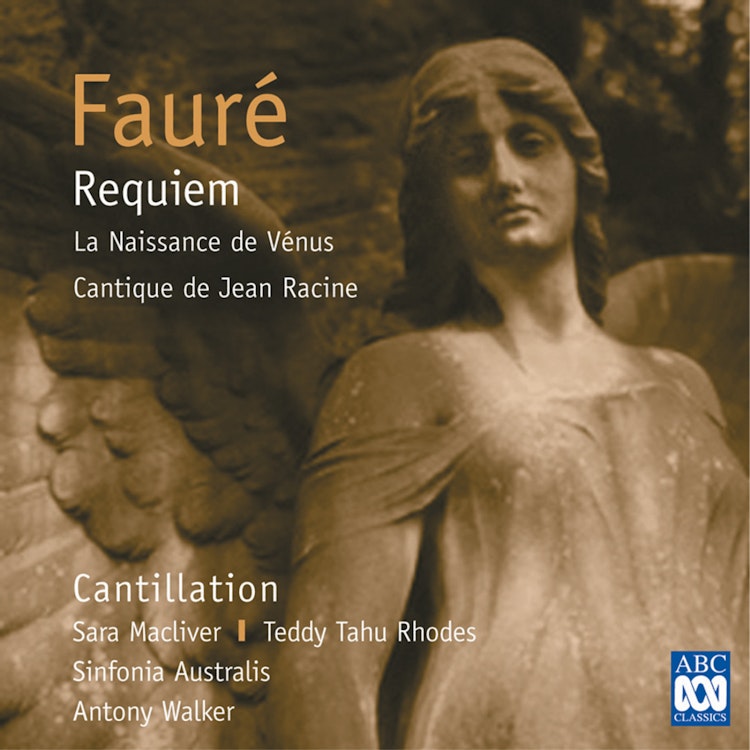
Gabriel Fauré's Requiem deliberately omits most references to judgment and damnation, choosing gentler texts for his setting.
Compositional Technique
Fauré's musical style blends the clarity of 18th-century French keyboard masters like Couperin and Rameau with a forward-looking approach to harmony, anticipating Impressionism.
Critical Reception
Despite an initial dismissive reception from his Vicar, Fauré's Requiem became a worldwide favorite after its 1900 publication, surprising the composer with its rapid circulation.
Composition History
Fauré claimed his famous Requiem was written 'for pleasure' and that he directed its first performance 'at the funeral of some parishioner or other'.
Compositional Technique
The Requiem's structure is subtly constructed with two analogous groups of movements pivoting around the fourth movement, Pie Jesu.
Composer Biography
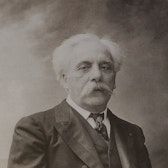
Fauré, despite being a church organist for 25 years, was not particularly religious and believed in a 'supreme leniency that could only be divine'.
Composition History
The version of the Requiem recorded here is an intermediate version from approximately 1893, considered closest to Fauré's original intentions before later symphonic reorchestration.
You might also enjoy...
Fauré: Requiem
Fauré: Requiem/Duruflé: Requiem/Poulenc: Motets
Elgar: Ave Maria / Give Unto the Lord / Te Deum and Benedictus, Op. 34