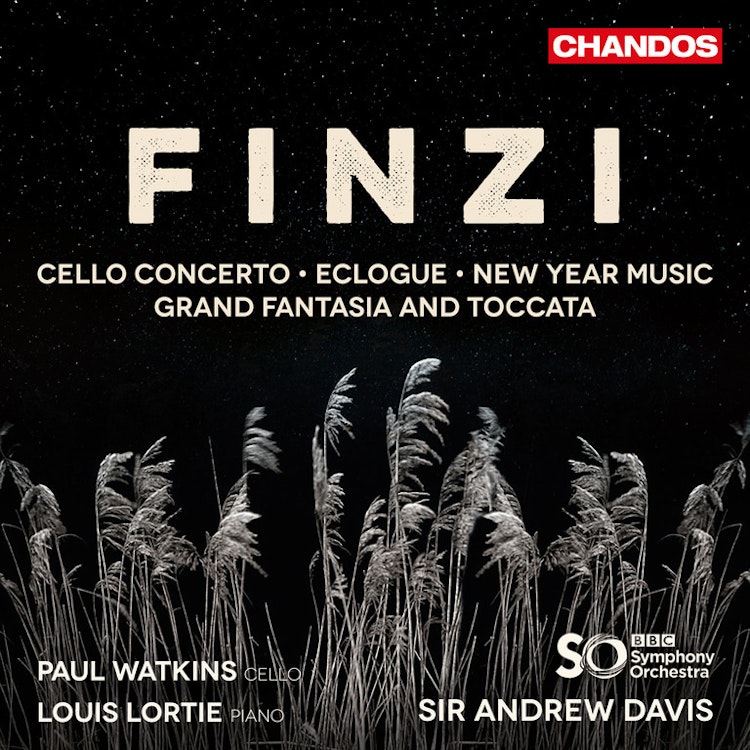
Finzi: Cello Concerto, Eclogue, New Year Music and Grand Fantasia & Toccata
9/7/2018, 6 Tracks, 1:10:40
Featuring
Sir Andrew Davis
Paul Watkins
Louis Lortie
BBC Symphony Orchestra
Gerald Finzi
Did you know?
1/7
Composer's Artistic Vision
Finzi's Nocturne (New Year Music) expresses the 'sober sadness' of New Year's Eve, drawing inspiration from Charles Lamb's Essays of Elia and Robert Bridges' poem Noel: Christmas Eve, 1913.
Performer Biography
Paul Watkins, the cellist on this recording, plays a cello made by Domenico Montagnana and Matteo Goffriller in Venice around 1730.
Composition History
The Eclogue, for piano and strings, was originally the slow movement of an abandoned piano concerto from the 1920s and was premiered posthumously.
Compositional Technique
In the Grand Fantasia and Toccata, Finzi incorporates both 17th-century conceptions of fantasia as a free display piece and toccata as a showcase for the performer's touch.
Composer Biography
Gerald Finzi (1901–1956) began composing his Cello Concerto in 1951, after receiving a terminal illness diagnosis that gave him five to ten years to live.
Compositional Technique
Finzi's Grand Fantasia was influenced by Bach's Chromatic Fantasia, a work he heard frequently performed by Harold Samuel, a teacher and friend.
Composition History
The Cello Concerto was completed in 1955 after Sir John Barbirolli, a conductor, requested a major work for the Cheltenham Music Festival.
You might also enjoy...
Tavener - Svyati
Benjamin, G.: At First Light / Ringed by the Flat Horizon / A Mind of Winter / Panorama / Antara
Howells: Rhapsodic Quintet / Violin Sonata No. 3
American Rounds
Sandrine Chatron “A British Promenade”
Davies: Strathclyde Concertos Nos. 7 & 8
Saunders: Stirrings Still
Watkins: Chamber Music and Works for String Orchestra
Bursts of Acclamation
Edwin H. Lemare - Organ Works Vol. 2
Night Fancy
Vaughan Williams: The Garden of Proserpine & In the Fen Country - Hadley: Fen & Flood (Arr. R. Vaughan Williams)