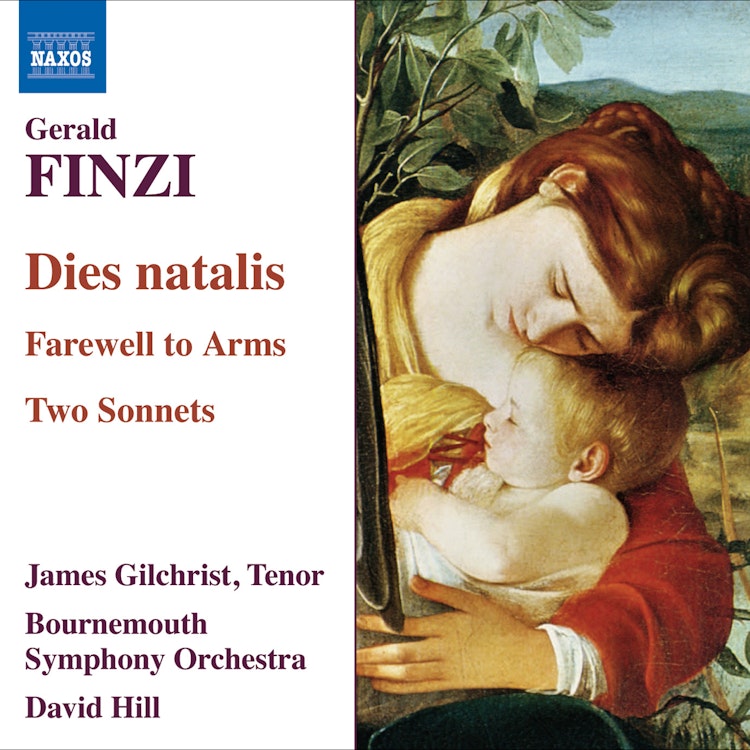
Finzi: Dies Natalis / Farewell To Arms / 2 Sonnets
10/29/2008, 12 Tracks, 1:06:38
Featuring
David Hill
James Gilchrist
Bournemouth Symphony Orchestra
Gerald Finzi
Did you know?
1/6
Composition History
It was characteristic of Gerald Finzi to complete works slowly over many years; for example, Dies natalis, a cantata for high voice and strings, had its origins in the 1920s but was not completed until 1939.
Composer's Artistic Vision
A quintessential preoccupation for Gerald Finzi was the themes of life's brevity and how experience tarnishes the innocent state of childhood, as seen in Dies natalis.
Composer Biography
Gerald Finzi, a British composer, was not only a prolific composer but also an ardent champion of neglected composers like Ivor Gurney and Hubert Parry, and he founded an amateur orchestra.
Critical Reception
When Gerald Finzi's Two Sonnets, settings of John Milton, were published, a critic challenged him for setting poetry deemed to defy musical accompaniment, to which Finzi robustly retorted his artistic rationale.
Composer Biography
Beyond music, Gerald Finzi was an insatiable reader who amassed a library of over three thousand books, and he even rescued several traditional English apple stocks from extinction in his orchard.
Composer's Artistic Vision
Gerald Finzi's choice of texts, such as those by the little-known Anglican metaphysical divine Thomas Traherne for Dies natalis, reflects his keen literary sensibilities and his championing of quality but neglected figures.
You might also enjoy...
Marlos Nobre • Orchestral, Vocal and Chamber Works
Saariaho, K.: 5 Reflets De L'Amour De Loin / Nymphea Reflection / Oltra Mar
Knussen Conducts Knussen
Knussen: Horn Concerto, Whitman Settings, etc.
Ross Edwards – White Ghost Dancing
Ross Edwards – White Ghost Dancing
Élégies (Les musiciens et la Grande Guerre, Vol. 34)
Mso – 100 Years Vol. 5: Peter Sculthorpe
Timothy Reynish International Repertoire Recordings, Vol. 8: Morning Music Midnight Music
MSO – 100 Years Vol. 5: Peter Sculthorpe
Villa-Lobos: Chôros / Bachianas Brasileiras / Guitar Works (Complete)