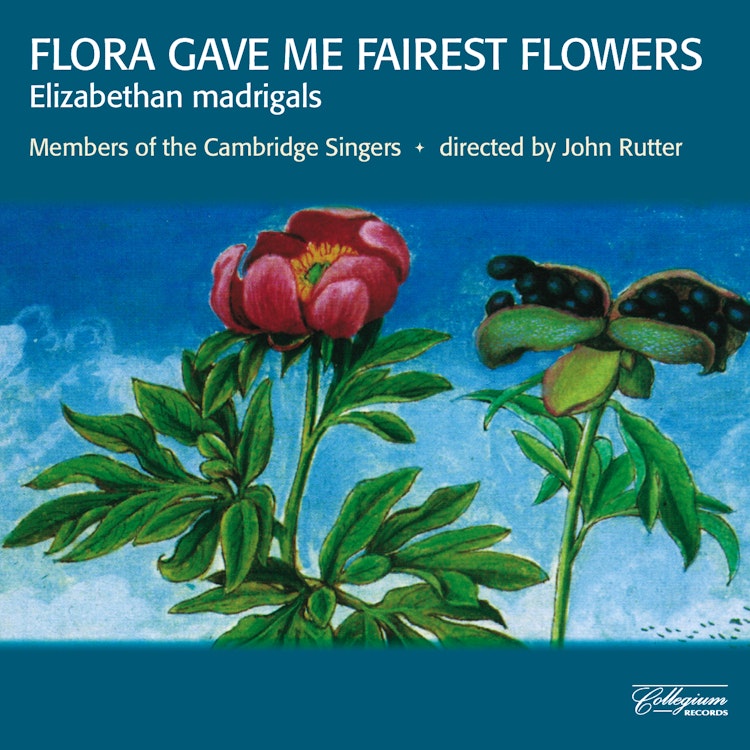
Flora Gave Me Fairest Flowers - Elizabethan Madrigals
6/1/2003, 25 Tracks, 1:11:43
Featuring
John Rutter
Cambridge Singers
Thomas Weelkes
William Byrd
John Bennet
Thomas Tomkins
John Wilbye
Thomas Vautor
Thomas Morley
John Farmer I
Michael East
Orlando Gibbons
John Dowland
Robert Ramsey
Did you know?
1/6
Compositional Technique
Some English madrigal composers, like William Byrd and Orlando Gibbons, preferred the simpler consort song form, where the tune remains in one voice and word-painting is not used.
Interpretation
This recording features unaccompanied vocal performances, though instrumental substitution or doubling of voices was likely common for English madrigals.
Composer's Artistic Vision
Thomas Morley, a founder of the 'English madrigal school', advised composers to be 'wavering like the wind' in their music, showing variety to please the listener.
Historical Context
The English madrigal was directly modelled on its Italian counterpart and was disseminated through printed editions, often performed by amateurs for pleasure.
Historical Context
The English madrigal, a musical form, flourished briefly between the 1590s and early 1620s, after which it virtually disappeared.
Composition History
The birth of the English madrigal is often dated to 1588, when Nicholas Yonge published 'Musica Transalpina', a collection of Italian madrigals adapted to English texts.
You might also enjoy...
Music from the Renaissance
Giaches de Wert: Versi d'Amore
To All Things a Season: Chansons, Madrigals and Lieder by Lassus