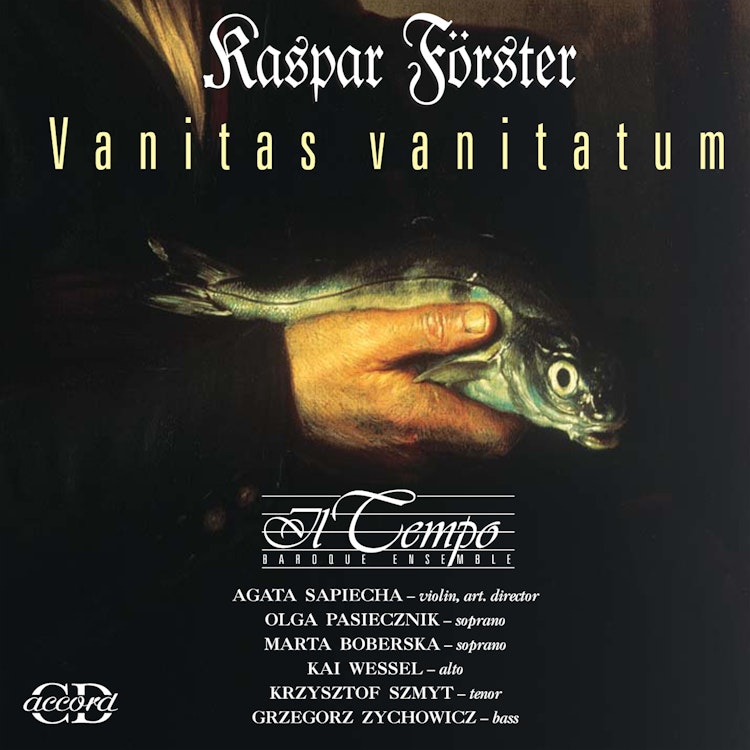
Förster's music, influenced by his teacher Carissimi, represents a "language of affections" typical of the Baroque, where rhetorical ideas and word-painting are dictated by the emotional expression of the text.
Composer Biography
A letter from 1638 reveals Kaspar Förster's fiery temperament when he hit the kapellmeister Scacchi with an ivory pan-pipe during a performance at the Royal Court in Warsaw.
Performer Biography
Olga Pasiecznik, a soprano on this recording, was born in Ukraine and has performed major roles in operas by Monteverdi, Purcell, Lully, Handel, and Mozart at the Warsaw Chamber Opera.
Compositional Technique
Förster's biblical dialogues, like those of his teacher Carissimi, combine Old and New Testament quotations with poetic insertions, but Förster uses melodic instruments more frequently in his continuo parts.
Performer Biography
Agata Sapiecha, the artistic director of the 'Il Tempo' ensemble, studied baroque violin with Simon Standage and also performs medieval and renaissance music on instruments like the rebec and vielle.
Composer Biography
Kaspar Förster, a distinguished vocalist and composer from Gdańsk, was a European citizen who studied in Rome with Giacomo Carissimi and later served at the Royal Chapel in Warsaw.
Recording & Production
This recording was made in cooperation with Polish Radio S.A. and received financial support from the Ministry of Culture and Art, the Voivode of Gdańsk, the Polish Early Music Society in Warsaw, and the Voivode of Warsaw.
You might also enjoy...
Costanzi: Cello Sonatas - Giovanni Sollima: Il mandataro
Castagnoli: Divertimento Ensemble
Victoria Yagling: Works for Cello & Piano
Spohr: String Sextet, Op. 140
Foerster: Nonet, Op. 147
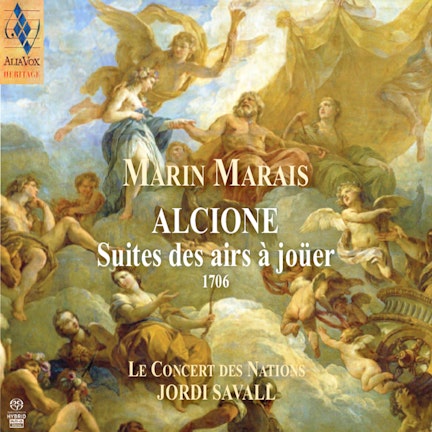
Marin Marais: Alcione (Suite des airs à joüer)
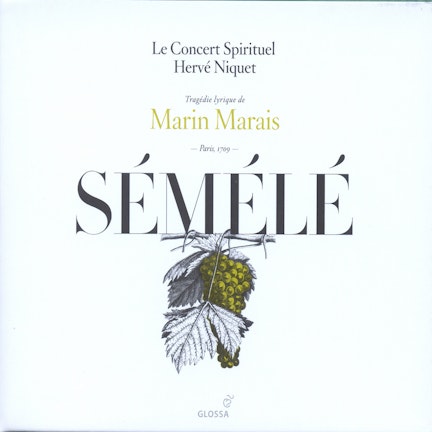
Marais, M.: Semele [Opera]
Pavane de la tromba hollandica
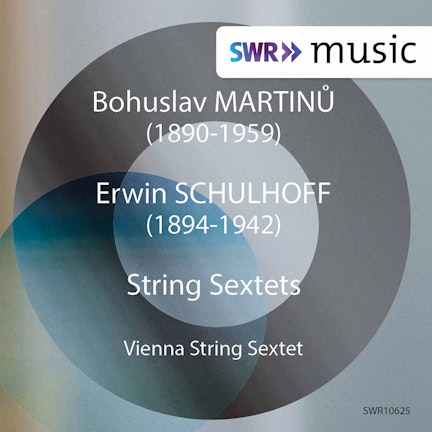
Martinů & Schulhoff: String Sextets
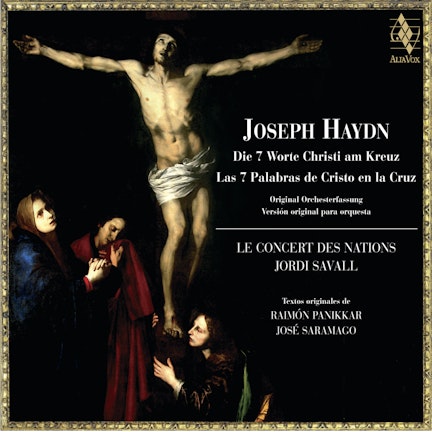
Haydn: The 7 Last Words of Christ On the Cross, Hob. XX:1A
D'Indy: Sextet in B-Flat Major
Kaminski: Werk für Streichorchester
Marin Marais: Alcione - Suite Des Airs À Joüer (1706)