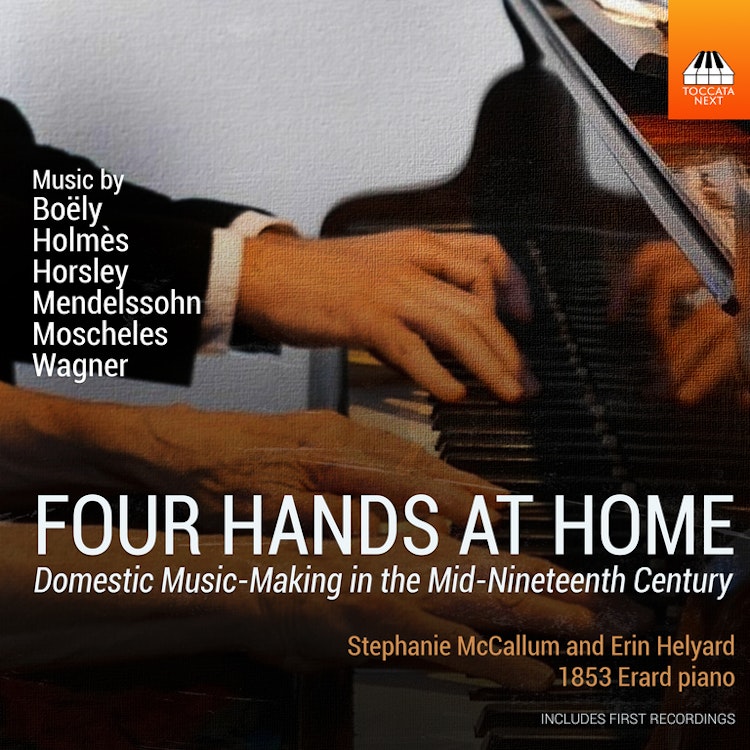
This recording features a restored 1853 Erard piano, a straight-strung instrument whose differentiated registers are better suited to imitating an orchestra in four-hand playing than cross-strung pianos.
Historical Context
As 'chamber music' moved to concert halls in the mid-19th century, the piano duet became the primary form of musical activity in the home.
Composer Biography
Augusta Holmès, a French composer of Irish descent, initially published some of her works under the male pseudonym Hermann Zenta to establish her reputation in an era that confined female artists.
Cultural Impact
Four-hand piano arrangements were crucial for disseminating works by composers like Wagner throughout Europe, allowing more households to experience his music than through theatre performances.
Historical Context
Theodor Adorno, a German philosopher and musicologist, noted in 1933 that he came to know classical music as a child through four-hand piano playing, which was common in home life.
Recording & Production
The McCallum/Helyard duo's previous album, Four Hands for France, was praised by critics for its original program, excellent liner notes, and state-of-the-art recording quality.
Composition History
Ignaz Moscheles's La belle union, Op. 76, was composed around 1828 specifically for the musical debut of Johann Baptist Cramer's niece, who played the primo part.
You might also enjoy...
Rubinstein: Music for Piano Four Hands, Vol. 2
4 Hands
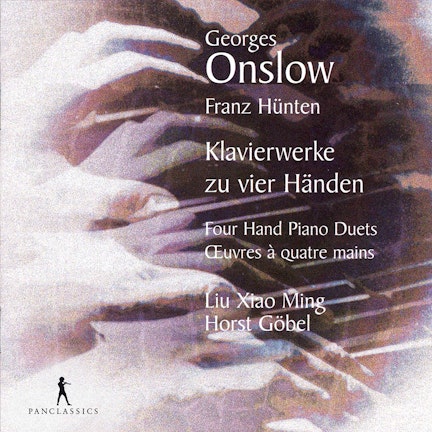
Onslow: Works for Piano 4-Hands
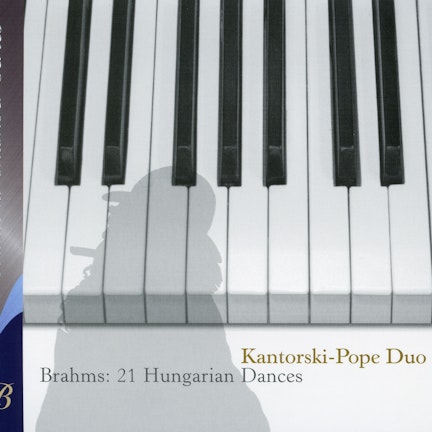
Brahms: 21 Hungarian Dances
4 Hands
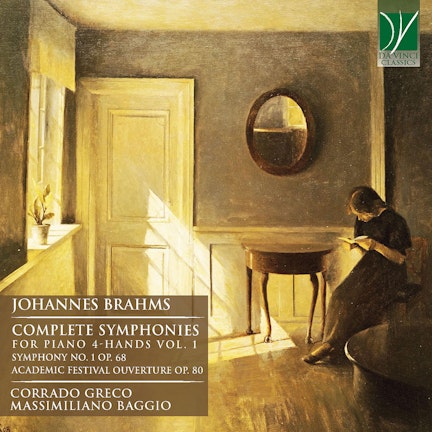
Brahms: Complete Symphonies for Piano 4-hands Vol. 1, Symphony No. 1 Op. 68, Academic Ouverture Op. 80
Hindemith: Complete Music for Piano Duo
Schumann: Klavierwerke & Kammermusik, Vol. 7
Piano Duet Music of Marie Jaëll and Jane Savage
Rêves d'Espagne
Felix Mendelssohn Bartholdy: Orchestral Works arr. by the Composer for Piano for 4 Hands
Polska na 4 ręce
Ghilarducci, Nanni, Riggi: Fluendo, New Music for Piano 4-hands