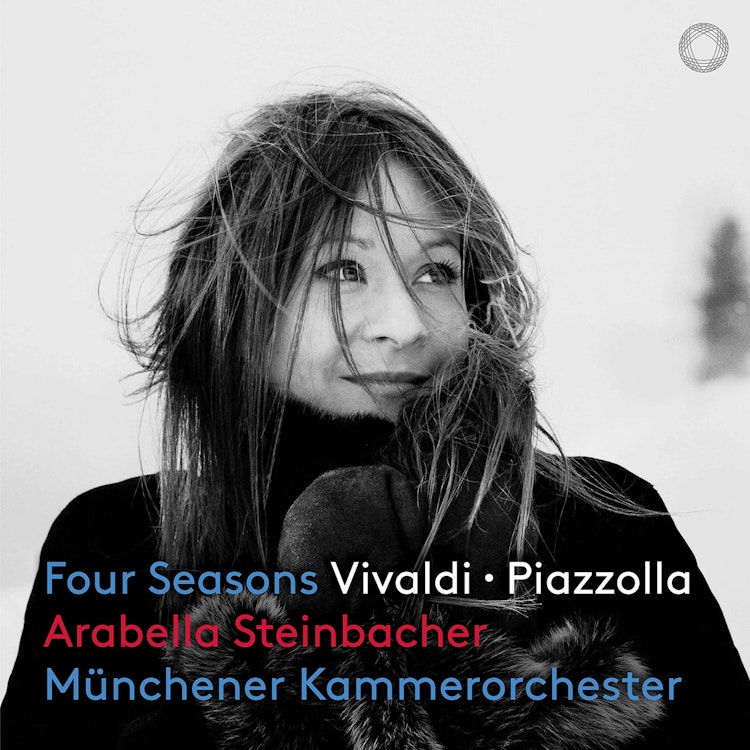
Violinist Arabella Steinbacher and the Münchener Kammerorchester perform two sets of four seasons, mixing Baroque music with tango: the famous cycle by Vivaldi, and Piazzolla’s “Four Seasons of Buenos Aires”. Piazzolla’s pieces, written between 1965 and 1970, are performed in a new arrangement for violin and string orchestra by Peter von Wienhardt.
Featuring
Arabella Steinbacher
Münchener Kammerorchester
Ástor Piazzolla
Antonio Vivaldi
Did you know?
1/7
Composer's Artistic Vision
Vivaldi's Four Seasons, though containing extensive musical imitations of nature, should not be considered absolute program music, as the program content remains subordinate to the solo-concerto form.
Cultural Impact
Piazzolla's main achievement was paving the way for the tango to progress from the dance hall to the concert hall, a development that tango traditionalists protested.
Composition History
Vivaldi's Four Seasons were published in Paris in 1725 as part of his Op. 8, with the subtitle 'Il cimento dell'armonia e dell'inventione' (the contest between harmony and invention).
Recording & Production
This album was recorded in July 2018 at the Himmelfahrtskirche München-Sendling, Munich, Germany.
Composer's Artistic Vision
Unlike Vivaldi, Piazzolla was not attempting to paint a musical portrait of natural phenomena in his 'seasons,' but rather to provide insight into the soul of the Argentinian people.
Composer Biography
Astor Piazzolla, an Argentinian bandoneonist and composer, pioneered the 'tango nuevo' (new tango) from 1955 onwards, after studying with Nadia Boulanger in Paris.
Composition History
Vivaldi introduced each concerto in The Four Seasons with an explanatory 'Sonetto dimostrativo,' a fourteen-line poem, with individual text lines reappearing in the score to aid interpretation.
You might also enjoy...
The Irish Seasons: Ailbhe McDonagh • Antonio Vivaldi
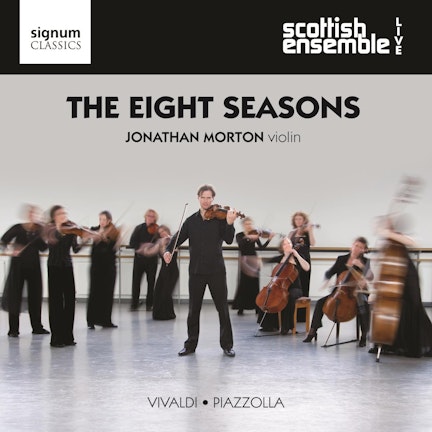
Eight Seasons: Astor Piazzolla - Four Seasons of Buenos Aires; Vivaldi - Four Seasons