Franck provided abundant and complete registration indications for his organ pieces, much more so than his contemporaries, though some gaps suggest specific organs were intended.
Composer Biography
César Franck (1822-1890) was the titular organist at the church of Sainte-Clotilde from 1859 until his death, developing a strong connection to that organ.
Compositional Technique
Franck's compositional language includes the use of canons, a rediscovery of classical forms like the choral and fugue, and a changeable subdominant function for harmonic color.
Recording & Production
The organ used for this recording in Salgareda, Italy, built by Andrea Zeni in 1999, is strongly inspired by the French Romantic organ building tradition that influenced Franck.
Composition History
Franck's most significant organ works are contained in three collections: Six Pièces (1860-63), Trois Pièces (1878), and Trois Chorals (1890), spanning over thirty years of his career.
Composer's Artistic Vision
Franck's organ music is characterized by careful attention to form, frequent use of cyclical structures inspired by Beethoven, and an emphasis on melodic contours with expansive intervals.
Historical Context
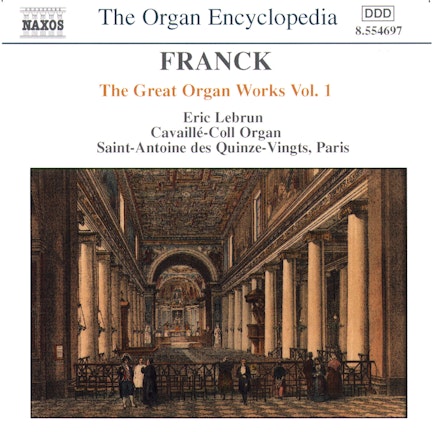
Franck's music is deeply connected to the symphonic instruments built by Aristide Cavaillé-Coll (1811-1899), an ingenious and prolific organ builder active in France and abroad during the second half of the 19th century.
You might also enjoy...
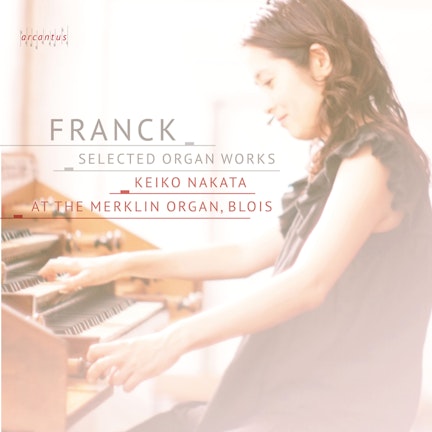
Franck - Selected Organ Works
Franck: Grandes œuvres pour orgue (À l'orgue de l'église Saint-Étienne de Caen)
Franck : Organ Works
Franck: The Complete Masterworks for Organ
Jeanne Demessieux - The Decca Legacy
César Franck: Douze pièces pour grand orgue
César Franck – Six Pièces
César Franck: 12 pièces pour grand orgue
Franck: D'un clavier à l'autre. Douze pièces pour orgue
Franck, C.: Organ Music
The Wanamaker Grand Court Organ: Peter Richard Conte