Couperin replaced traditional dance suites with 'ordres,' a term unique to him, arranging pieces to convey moods, portraits, or scenes through evocative titles.
Composer's Artistic Vision
Couperin's artistic philosophy, "I will freely admit that I much prefer that which touches me to that which surprises me," reveals his profound sensibility and depth.
Interpretation
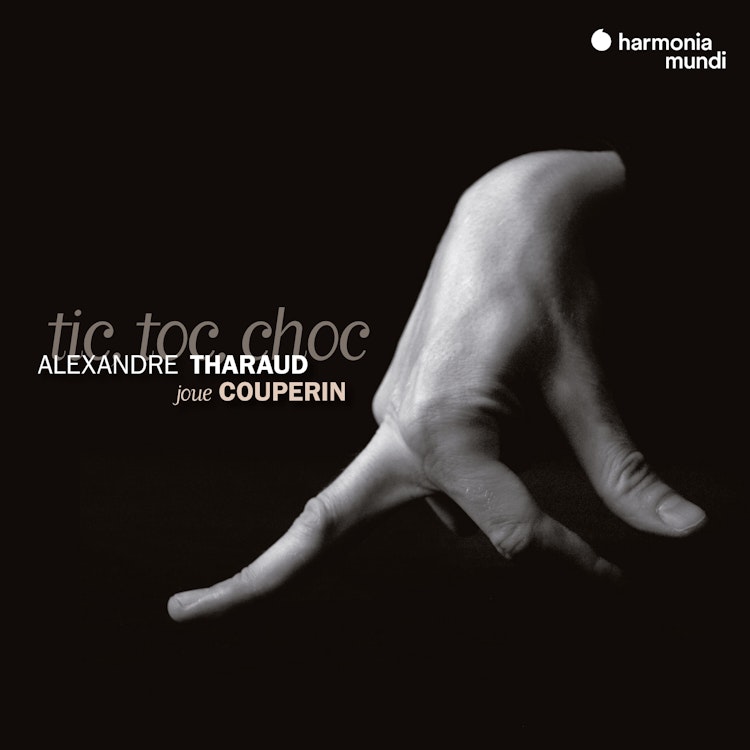
Pianist Alexandre Tharaud used re-recording to play all the parts himself in Couperin's Muséte de Taverni, a piece typically requiring multiple performers.
Composer Biography
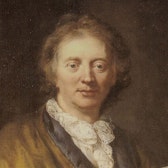
François Couperin, born into a prestigious musical family in 1668, became an organist at the royal chapel in Versailles by 1693 and taught harpsichord to the royal children.
Cultural Impact
Couperin's music inspired later composers like Debussy and Ravel, who incorporated elements of his style and even referenced him directly, as seen in Ravel's Le Tombeau de Couperin.
Compositional Technique
Couperin's harpsichord pieces, published in four collections, introduced innovations like 'cross-hands' technique and precise notation for ornaments.
Interpretation
For Couperin's Bruit de guerre, Alexandre Tharaud imagined a side drum part, drawing inspiration from Dandrieu's Caractères de la guerre and 18th-century harpsichords with percussion stops.
You might also enjoy...
Pièces de clavecin, Livre IV, Ordre 25 (Live)
Galuppi, B.: Complete Piano Sonatas, Vol. 3
Bach: Piano Works
Couperin: Tic Toc Choc
Récital à Saint-Frambourg: Couperin, Rameau, Marais & Daquin
Galuppi, B.: Complete Piano Sonatas, Vol. 1
Bach, J.S.: Anna Magdalena Notebook / Little Preludes / Italian Concerto
Galuppi: Keyboard Sonatas, Vol. 3
Bach, J.S.: Inventions and Sinfonias, Bwv 772-801 / Anna Magdalena's Notebook (Fragments)