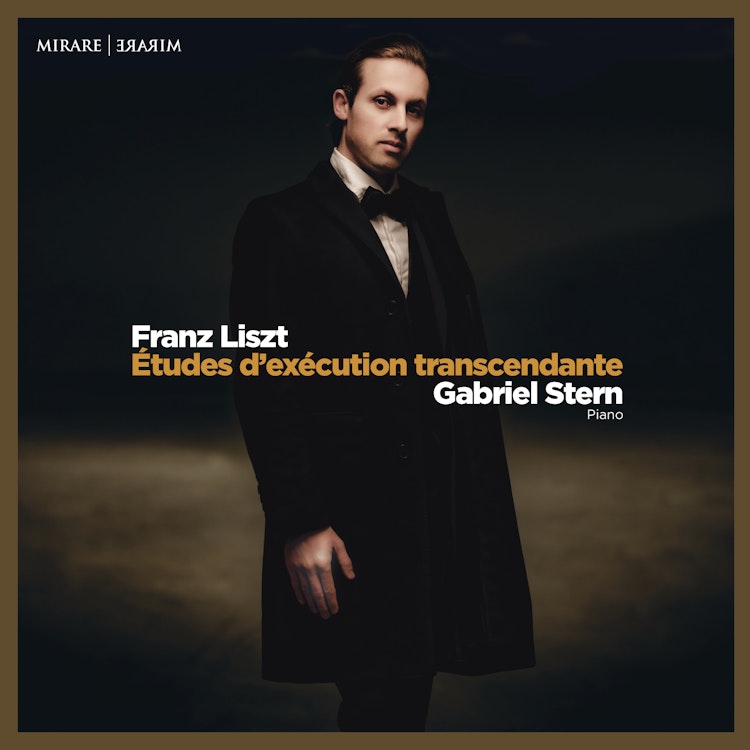
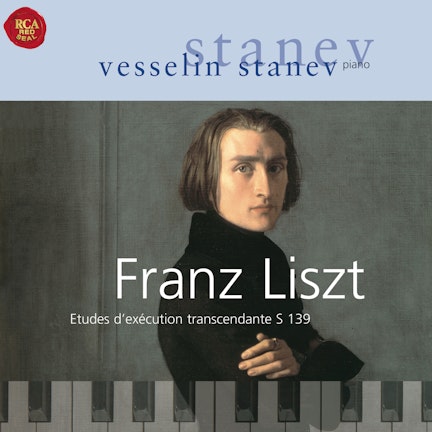
The adjective "transcendant," used in the title of Liszt's Études, refers to their unprecedented difficulty, a term later adopted by composers Lyapounov and Sorabji for their own études.
Composition History
Liszt's Transcendental Études underwent several revisions; an earlier version from 1837, titled Grandes Etudes, was considered "unreasonably difficult" before being trimmed down.
Composer Biography
Franz Liszt, the composer, was a figure of contradictions, described as an adventurer, visionary, seducer, and reverend, an angel and a demon.
Composer's Artistic Vision
Liszt transformed the traditional piano étude, which was typically pedagogical and focused on finger mechanics, into a "flamboyant poem."
Composer's Artistic Vision
The 12 Transcendental Études are described as "visions" inspired by Liszt's observations of nature and his readings, blending the fantastic with the idyllic and the epic with contemplation.
Performer Biography
Gabriel Stern, the pianist on this recording, won first prize at the International Piano competition of Montrond les Bains in 2012 and the Virtuosity Prize at the 10th Adilia Alieva International Piano Competition in 2016.
Composition History
The 12 Transcendental Études (1851) by Liszt originated from an earlier version, the Étude en douze exercices, written when he was just 15 years old.
You might also enjoy...
Alkan: 12 Etudes Dans Les Tons Mineurs, Op. 39: Concerto
Awadis: Étude No. 1: Playing Games
Live from The Cliburn - Liszt: Transcendental Etudes