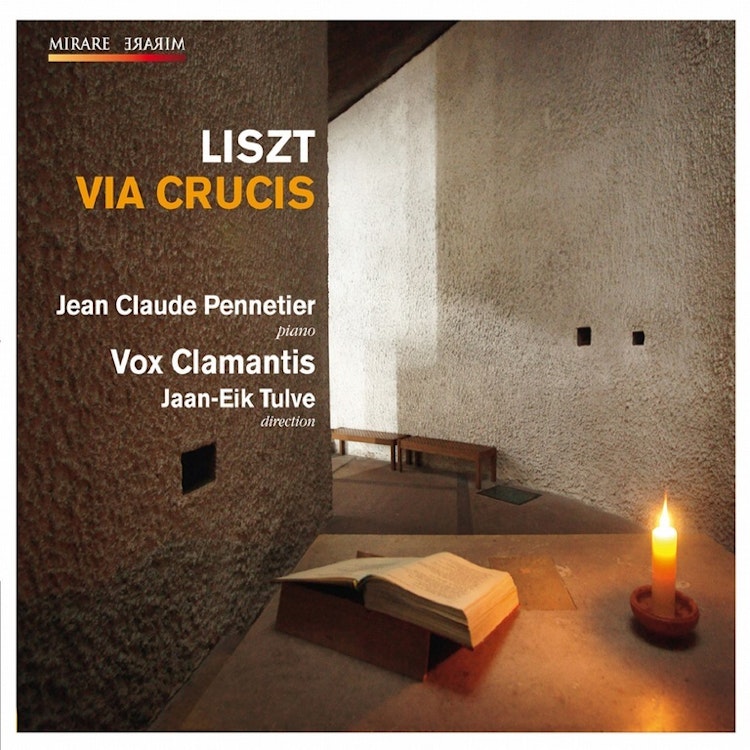
Liszt's Via Crucis uses a new and revolutionary musical language that hints at the atonal revolution, blending plainchant and Lutheran chorales with modern harmonies.
Composition History
The text for Liszt's Via Crucis was compiled by Carolyne von Sayn-Wittgenstein, his companion before he entered the Franciscan order, using biblical quotations, Latin hymns, and German chorales.
Performer Biography
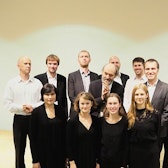
Vox Clamantis, an Estonian ensemble, was formed in 1996 by singers, composers, instrumentalists, and choral conductors interested in Gregorian chant as the basis of European art music.
Performer Biography
Jean-Claude Pennetier, the French pianist, began studying piano at age three and later interrupted his solo career to focus on composition and conducting.
Composer Biography
Liszt's piano piece Weinen, Klagen, Sorgen, Zagen (Weeping, wailing, lamenting, fearing) reflects his personal suffering after the tragic death of his daughter Blandine.
Compositional Technique
In Via Crucis, the piano and choir engage in a dialogue, with some Stations of the Cross assigned to piano alone and others sung by soloists and/or choir.
Compositional Technique
Liszt's Via Crucis, written for soloists, mixed choir, and organ (often played on piano), is considered one of his boldest and most original compositions.
You might also enjoy...
Brilliant Variations on Sentimental Songs: Slipping Virtuosity into the Antebellum Drawing Room