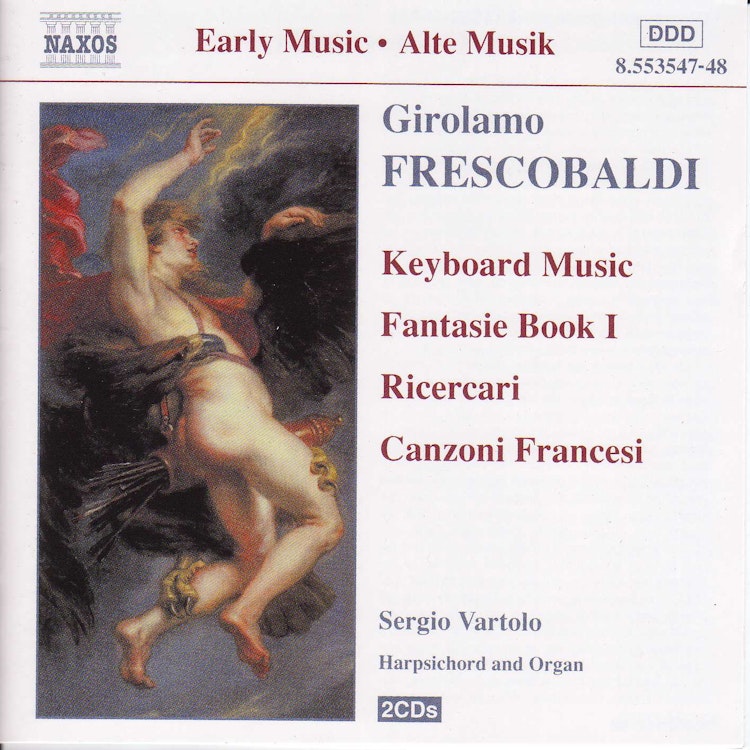
Frescobaldi: Fantasie, Book 1 / Ricercari / Canzoni Francesi
3/26/2003, 27 Tracks, 2:12:08
Featuring
Sergio Vartolo
Girolamo Frescobaldi
Did you know?
1/7
Instruments
The organ used in this recording, located in Pistoia, Italy, was built in 1664 by the Flemish Jesuit Willem Hermans and combines both Italian and Flemish construction features and sounds.
Composer's Artistic Vision
Frescobaldi's early works, including the Fantasie and Ricercari, were intended as non-liturgical chamber music for entertainment, rather than for church services.
Composer Biography
Girolamo Frescobaldi's Fantasie and Ricercari pieces were among his "first efforts" or "first little part of my creative talent," published early in his career.
Interpretation
Despite Frescobaldi's title as Vatican organist, the harpsichord is generally preferred for performing his works, including the Fantasias, contrary to common belief.
Composer Biography
Frescobaldi's time in Flanders was significant, as he inherited a deep respect for Flemish musicians like Cipriano de Rore, who greatly influenced the development of counterpoint in Italy.
Cultural Impact
J.S. Bach, a master of counterpoint, likely knew and was inspired by Frescobaldi's work, with connections evident in Bach's Goldberg Variations and themes in his Ricercari.
Compositional Technique
Frescobaldi's Fantasie and Ricercari contain elements that he would later develop in his Capricci, which are considered his most important and finished compositions.
You might also enjoy...
Hurlebusch: Harpsichord Music
Pièces de Clavecin, Premier Livre, Cinquieme Ordre
Couperin: Premier livre de pièces de clavecin, Ordre 1
François Couperin: Second Livre de Pièces de clavecin
Frescobaldi: Harpsichord Works
Couperin: L'art de toucher le clavecin & Pièces de clavecin (Excerpts)
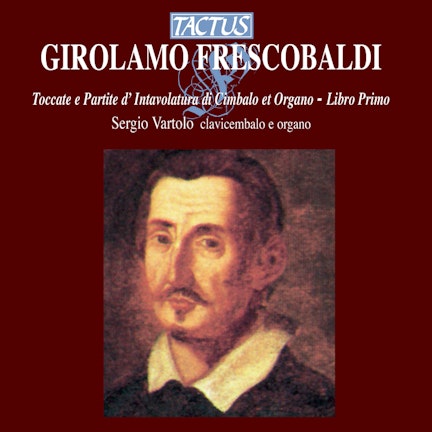
Frescobaldi: Toccate e partite d'intavolatura di cimbalo et organo, libro primo
Michelangelo Rossi: Music for Organ and Harpsichord
Duphly, J.: Pieces De Clavecin, Book 2
Frescobaldi Edition Vol. 1, Toccatas & Partitas
Couperin: Deuxième livre, de pièces de clavecin, Ordre 9
François Couperin: Quatrième Livre de Pièces de Clavecin
Frescobaldi: Toccate & Partite d'Intavolatura di Cimbalo & Organo, Libro 2