The title 'organist' in Frescobaldi's time was generic and not always tied to the organ itself, as much vocal music was written by 'organists'.
Composer Biography
Frescobaldi, the composer, admitted that the guiding hand of Luzzaschi, a rare organist and servant of the Este family, was at the origin of this work.
Compositional Technique
The Capricci are difficult to play due to their 'different tempos and variations' and 'not as simple a style' as Frescobaldi's Ricercari.
Composition History
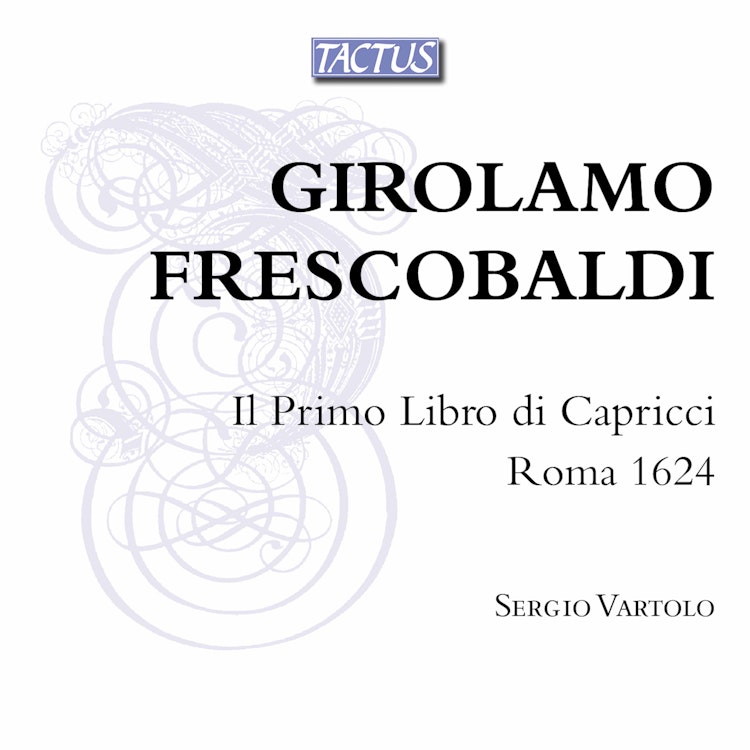
Frescobaldi's 1624 Capricci were conceived as a continuation of his 1615 Book of Ricercari, but with a distinct keyboard idiom.
Composer's Artistic Vision
Frescobaldi insisted on the study of scores, believing it essential for musicians to distinguish 'the true gold of virtuous actions from those of the ignorant'.
Compositional Technique
The Capricci often feature a solemn, contrapuntal first section, followed by rhythmic intensification, a chromatic adagio, and a solemn or rhythmically dense close.
Cultural Impact
The final Capriccio uses a theme called 'Ruggero' based on an incipit from Ariosto's Orlando Furioso, where Bradamante declares her loyalty to the paladin.
You might also enjoy...
Couperin: Deuxième livre de pièces de clavecin, Ordre 7
Hurlebusch: Harpsichord Music
Couperin: Deuxième livre de pièces de clavecin, Ordre 6
J.S. Bach: Keyboard Works, Vol. 1
Couperin: Deuxième livre de pièces de clavecin, Ordre 11
J.S. Bach: The Well-Tempered Clavier, Book 2
Elizabeth Turner: Lesson II: II. Andante affettuoso
Bach, J.S.: Well-Tempered Clavier (The), Book 2
Couperin: Pieces de clavecin des Livres I & II
Handel: Minuets for keyboard, HWV A15
Couperin: Troisième Livre de pièces de clavecin, Ordre 13