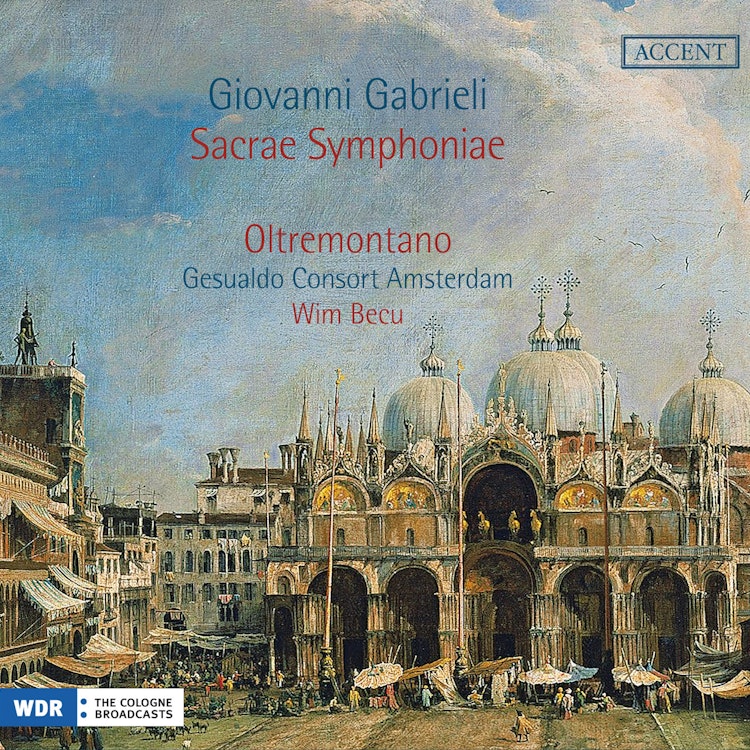
Gabrieli's Sacrae Symphoniae (1597) includes instrumental and motet repertoire for 6 to 16 parts, suitable for church services, and was dedicated to the Fugger family of Augsburg.
Performer Biography
Wim Becu, the director of Oltremontano, has collaborated with leading early music ensembles and artists for over 25 years, including Philippe Herreweghe, René Jacobs, and Jordi Savall.
Historical Context
The self-representation of the 'myth of Venice' played a role in all pieces recorded, reflecting the self-image of a great nation through magnificent music and large ensembles.
Composer Biography
Giovanni Gabrieli (c. 1554/7–1612), a Venetian composer, spent time at the court of Albrecht V in Munich, where he may have studied with Orlando di Lasso, the Kapellmeister there.
Composer's Artistic Vision
Gabrieli considered his 1597 Sacrae Symphoniae publication a summary of his work to date and the first dedicated exclusively to his compositions.
Compositional Technique
In the Sacrae Symphoniae, Gabrieli treats voices and instruments distinctly, an innovation for the late 16th century when instruments were typically subordinate to voices.
Compositional Technique
Gabrieli's Sonata pian e forte is notable for its precise dynamic markings and exact instrumentation (e.g., Coro I: zink and three trombones; Coro II: violin and three trombones), which were new procedures in 1597.
You might also enjoy...
Lucchesi: Sonata per Organo
Vespri Concertati della Scuola Bolognese
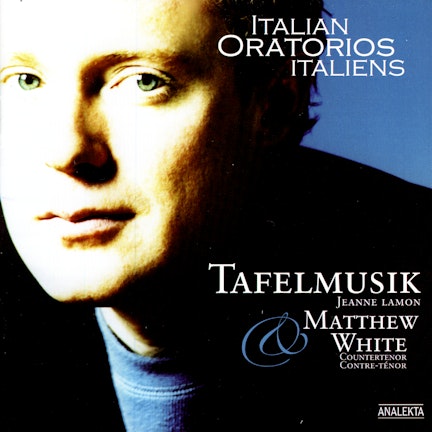
Oratorios Italiens
Claudio Monteverdi: Madrigali Guerrieri Et Amorosi
Grandi: Celesti Fiori - Motetti
Avanti L'opera: An A-Z of Italian Baroque Overtures
Croce: Triaca musicale - Pellegrini: Canzoni
Carissimi: Mass for Three Voices / 6 Motets
Christmas in Venice
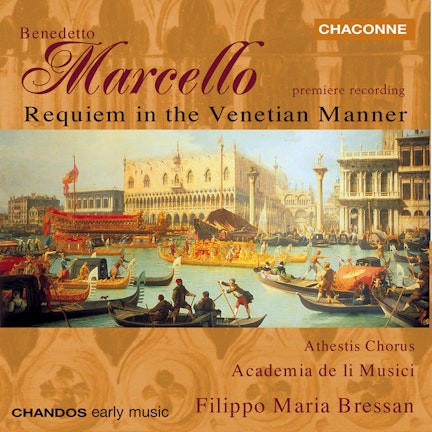
Marcello: Requiem in the Venetian Style
Italian Oratorios (Oratorio Italiens) / Compilation, Vol. 10