Philippe Gaubert preferred freer, more concise forms of a poetic and evocative nature, producing only one symphony but many short pieces.
Compositional Technique
Gaubert's violin writing, as heard in the Sonata, is purely melodic, rarely using double-stopping or pizzicato, emphasizing a lyrical effusion.
Instruments
Jean-Marc Phillips-Varjabédian, the violinist on this album, plays a Petrus Guarnerius violin from Venice, dated 1748.
Composer Biography
Philippe Gaubert, the composer, was a brilliant flautist and also a magnificent violinist, with the Paris Conservatoire commissioning competition pieces for both instruments.
Critical Reception
The Sonata for Violin and Piano was premiered by its prestigious dedicatees, Jacques Thibaud and Alfred Cortot, and was considered worthy of taking its place alongside sonatas by other prominent French composers.
Composition History
The Sonata for Violin and Piano, a major work on this album, was composed in 1915 during the First World War.
Recording & Production
The Trois Aquarelles are recorded here for the first time in the version for violin, cello, and piano, though a more familiar version with flute was also offered by the composer.
You might also enjoy...
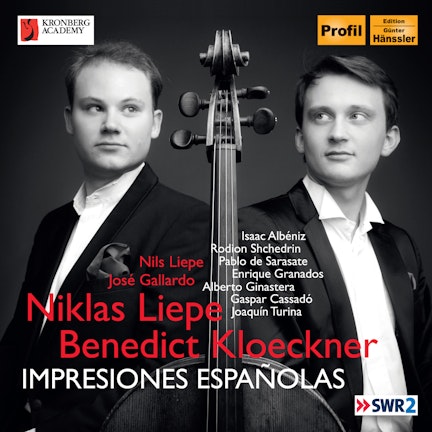
Impresiones Españolas
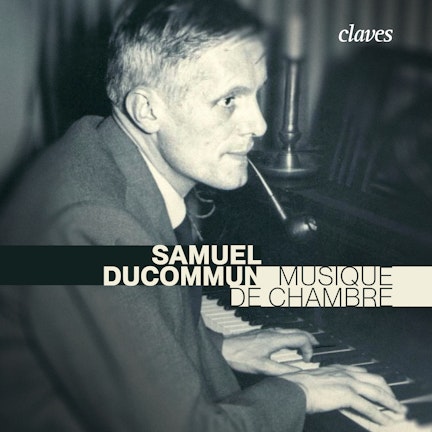
Samuel Ducommun: Musique de chambre
Shostakovich: Works
Morningside Music Bridge 2001 Highlights Collection
Schulhoff: Chamber Music
Thuille: Violin Sonatas 1 & 2, Cello Sonata in D Minor & Piano Trio in E-Flat Major
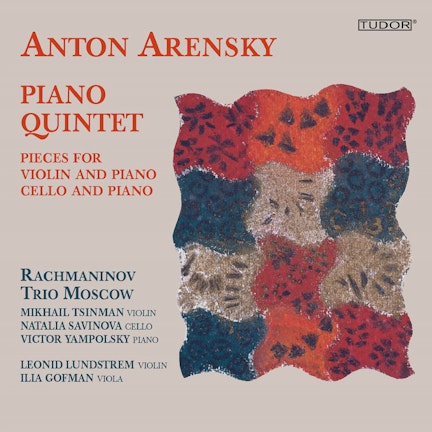
Arensky: Piano Quintet
Rendez-vous with Martha Argerich
Canto doloroso e danza
Vilma von Webenau
Helene Liebmann: Violin Sonata - Cello Sonata - Piano Trio