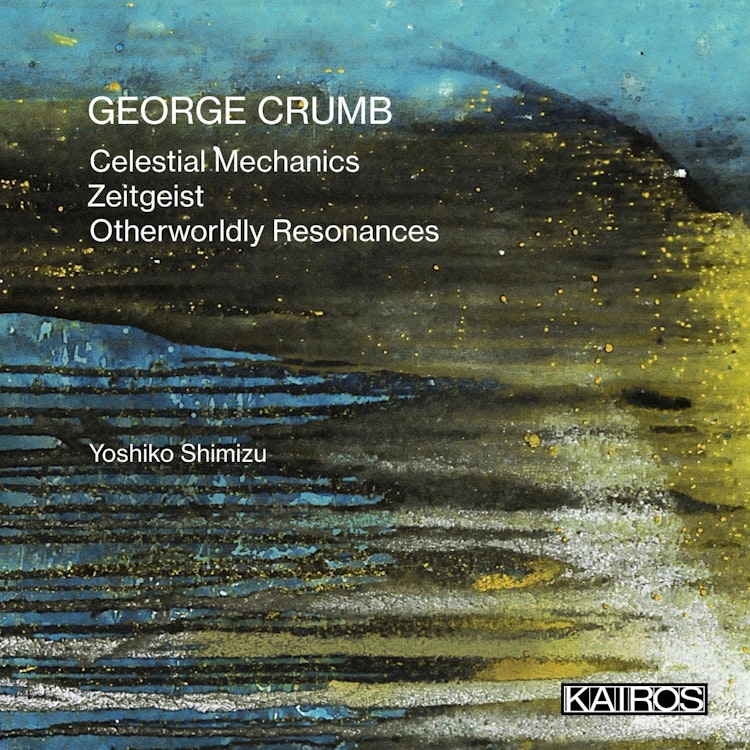
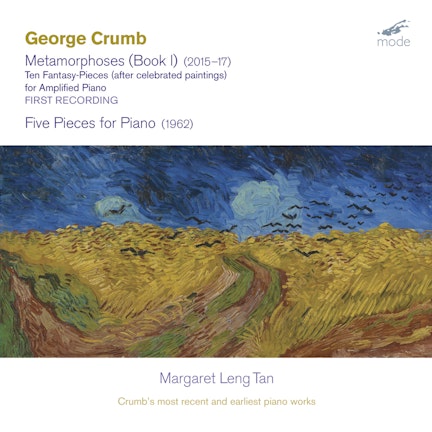
George Crumb's Celestial Mechanics is the fourth work in his Makrokosmos series, following two solo piano works and one for two pianos and percussion.
Composer's Artistic Vision
George Crumb's Zeitgeist explores themes relevant to late 20th-century musical sensibility, including musical primitivism, minimalism, the synthesis of Western and non-Western music, and the appeal of timbre as a structural element.
Composer's Artistic Vision
Crumb's Celestial Mechanics, subtitled 'Cosmic Dances for Amplified Piano, Four Hands', was inspired by the majestic movement of stars, suggesting a 'cosmic choreography'.
Compositional Technique
In Zeitgeist, the movement 'Monochord' is notated in a symbolic circular manner and is based entirely on the first 15 overtones of a low B♭, creating a continuous droning sound.
Compositional Technique
In Celestial Mechanics, George Crumb departs from tradition by expanding the four-hand medium to six hands at two points, requiring the page-turner to participate in the performance.
Recording & Production
Yoshiko Shimizu is the only pianist who has created 'solo' realizations of George Crumb's works for two pianists on recordings, a feat made possible by recording technology.
Performer Biography
Yoshiko Shimizu, the pianist on this album, studied with David Burge, the pianist to whom George Crumb's Makrokosmos I is dedicated.