Under Emperor Charles VI, music at the Viennese imperial court was subject to strict regulations, similar to the Spanish courtly ceremony that governed the entire court organization.
Composition History
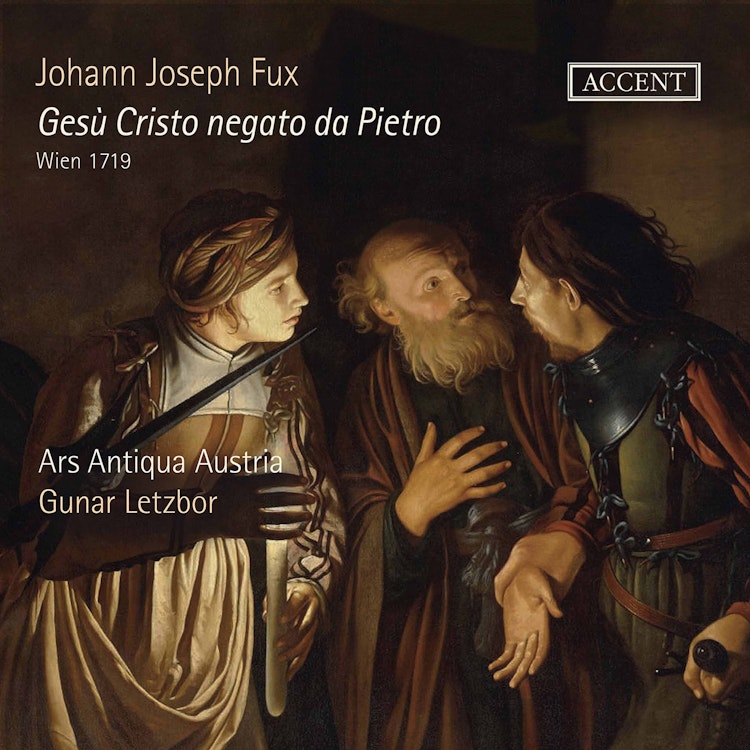
The text for "Gesù Cristo negato da Pietro" was written by court poet Pietro Pariati in the ornate 18th-century Italian, which would be difficult for modern Italian speakers to understand.
Recording & Production
This recording was made during the public dress rehearsal on the concert day, as a live recording of the concert itself was not possible due to microphone interference with the audience and the magical effect of the performance.
Composer's Artistic Vision
Fux's oratorios for Holy Week are notable for their lyrical melodies and the use of the contemporary doctrine of figures to illustrate various emotions, while maintaining contrapuntal mastery.
Notable Performances
This Fux oratorio was performed in public for only the second time in 300 years at the Konzerthaus in Vienna on January 24, 2020, featuring a unique staging with a cross and illuminated lectern.
Interpretation
The conductor, Gunar Letzbor, chose to omit a large portion of the recitatives in live performances, instead presenting brief summaries of the scenes and emotions, and having singers recite aria texts in German.
Composer Biography
Johann Joseph Fux (1660-1741) is considered the progenitor of modern counterpoint, as described in his work "Gradus ad Parnassum."