Luigi Bianchi, a mandolinist from Milan, was known as the "Paganini of the Milanese mandolin" for his polyphonic and virtuosic playing.
Instruments
The late 19th century saw the development of the 'romantic quartet' for mandolin music, consisting of a first mandolin, second mandolin, mandola, and mandoloncello, expanding the instrument's performance potential.
Cultural Impact
The mandolin's popularity in the late 19th century was so widespread that it crossed the Atlantic with Italian emigrants and was played by thousands in Europe and the United States.
Critical Reception
The mandolin and guitar serenade in Verdi's Otello was considered a difficult piece to perform, yet a Florentine ensemble's rendition in 1888 was praised by conductor E. Usiglio as the best he had heard.
Historical Context
The mandolin experienced a "golden age" in the late 19th century, especially in Florence, after a period of declining interest following the early 1800s.
Historical Context
In 1887, Giuseppe Verdi, a renowned Italian opera composer, included a serenade for mandolins and guitars in his final opera, Otello, showcasing the instrument's growing acceptance beyond popular music.
Recording & Production
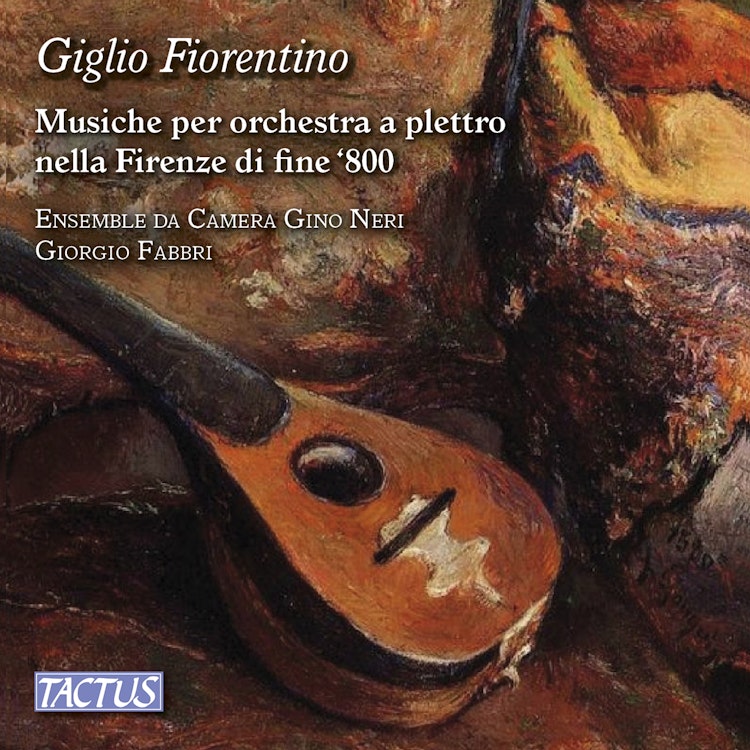
The album cover features Paul Gauguin's 1880 painting "Mandolin on a chair," visually connecting the recording to the historical period of mandolin revival.