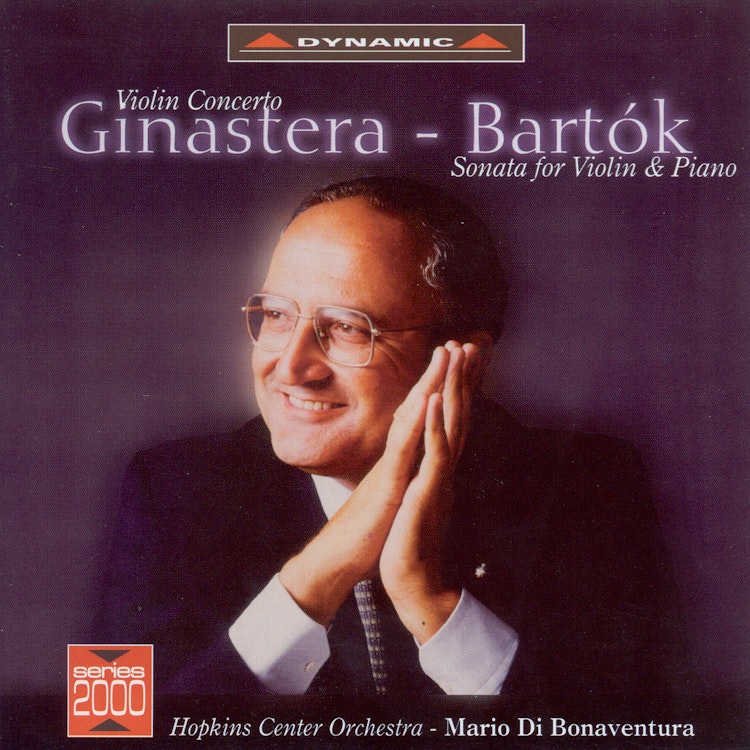
Alberto Ginastera's Violin Concerto was commissioned by the New York Philharmonic Orchestra and dedicated to them, along with Leonard Bernstein and Ruggiero Ricci, who premiered it on October 3, 1963.
Compositional Technique
Alberto Ginastera's Violin Concerto is unique in its structure, beginning with a solo violin Cadenza followed by six Studies, rather than a traditional concerto form.
Notable Performances
The first complete performance of Bartók's Sonata for Violin and Piano took place in Budapest on January 25, 1904, with the composer himself at the piano and violinist Jenö Hubay.
Composer's Artistic Vision
In the Scherzo and Perpetuum mobile of his Violin Concerto, Alberto Ginastera deliberately quotes fragments of Paganini's Capricci as an homage to the virtuoso violinist.
Composer Biography
Béla Bartók's Sonata for Violin and Piano, composed in 1903, reflects his search for a personal identity in music and his strong Hungarian nationalistic principles.
Instruments
Ginastera's Violin Concerto requires an impressive orchestra, including unusual wind instruments like the E-flat clarinet and bass clarinet, six distinct percussion groups, celesta, harp, and a large string section.
Compositional Technique
The central part of Ginastera's Violin Concerto features an Adagio for 22 soloists, reflecting the 'concerto for orchestra' style where individual instruments emerge from the ensemble.
You might also enjoy...
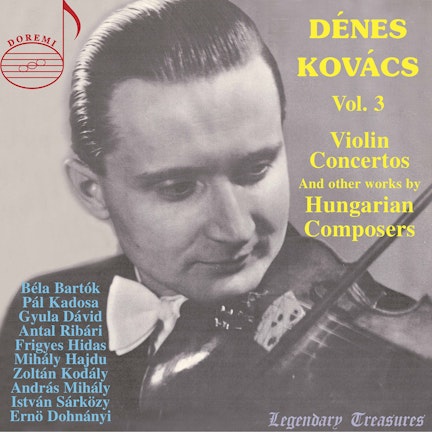
Dénes Kovács, Vol. 3: Hungarian Composers
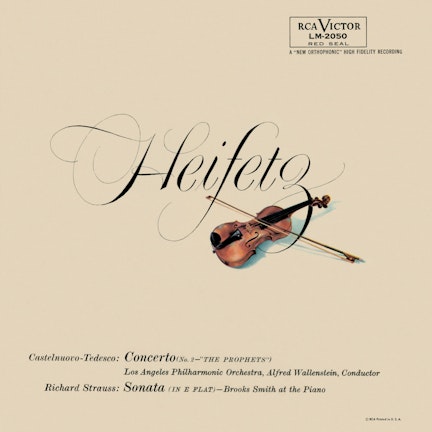
Tedesco: Violin Concerto No. 2, Op. 66 "I profeti", Strauss: Sonata, Op. 18, in E-Flat
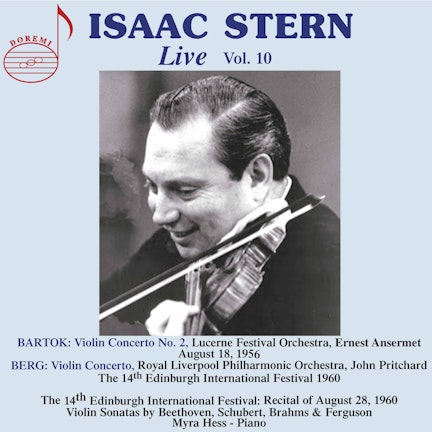
Isaac Stern, Vol. 10 (Live)
Johanna Martzy, Vol 1: Montréal Recital 1960 (Live)
Souvenir d'Amerique
Lost American Violin Sonatas, Vol. 1
Richard Flury: Violin Sonata No. 1, No. 2 & No. 3
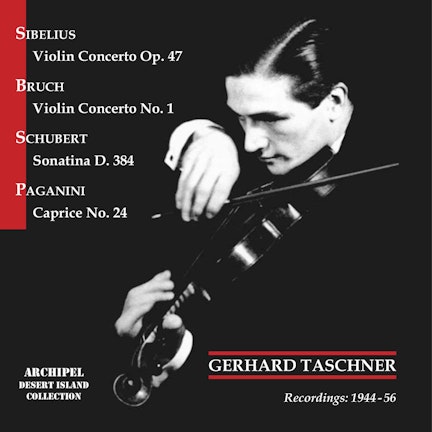
Sibelius, Bruch, Schubert & Paganini: Violin Works
Listen! Hear Her Voice: Music By Women
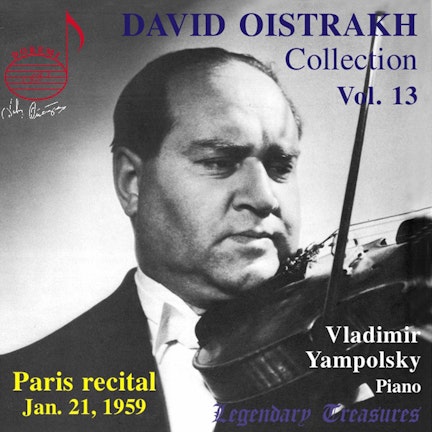
Oistrakh Collection, Vol. 13: Paris Recital, 1959 (Live)