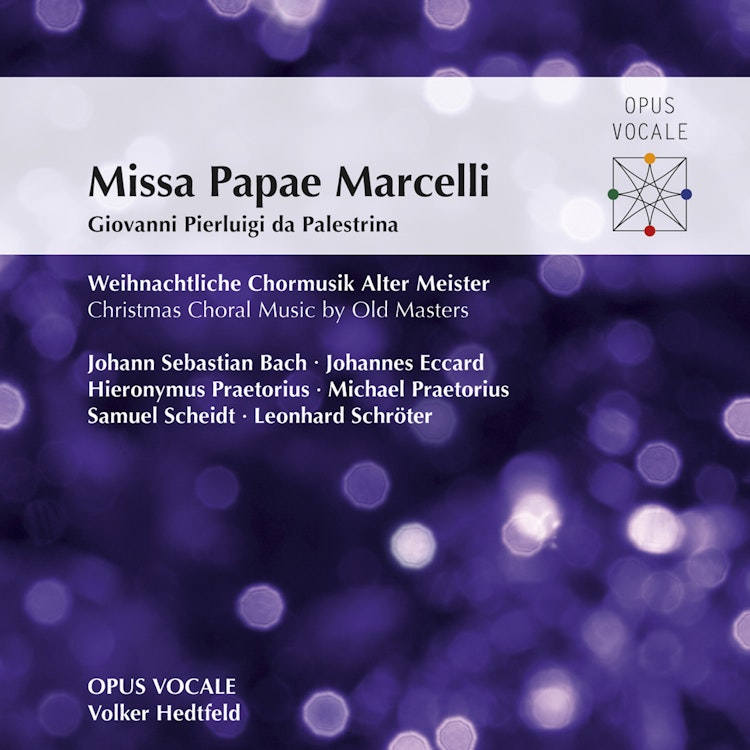
Giovanni Pierluigi da Palestrina: Missa Papae Marcelli
6/24/2022, 19 Tracks, 55:07
Featuring
Volker Hedtfeld
Opus Vocale
Anonymous (Gregorian Chant)
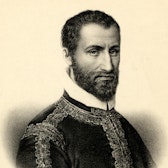
Giovanni Pierluigi da Palestrina
Johannes Eccard
Leonhardt Schröter
Michael Praetorius
Anonymous (Christmas)
Hieronymus Praetorius
Samuel Scheidt
Did you know?
1/7
Performer Biography
Volker Hedtfeld, the conductor, founded his first vocal ensemble, Opus 99, in 1999 and later established the chamber choir Opus Vocale in 2002.
Composition History
Pope Marcellus, after whom Palestrina's Missa Papae Marcelli is named, admonished papal singers in 1555 to make music appropriate for the day and ensure text intelligibility.
Historical Context
The Council of Trent (Tridentinum), held between 1545 and 1563, aimed to combat deficiencies within the Catholic Church, including concerns about church music.
Compositional Technique
Palestrina's Missa Papae Marcelli sought a balance between liturgical function and artistic expression, achieving an emotional effect through rhythmic alternation and formal strictness.
Historical Context
Unlike Ulrich Zwingli and Johannes Calvin, who almost completely banned music from liturgy, Martin Luther encouraged the composition of German Psalms and chorales for congregational understanding.
Critical Reception
Palestrina was long considered the 'saviour of sacred music' for his Missa Papae Marcelli, a myth that inspired works like Hans Pfitzner's opera 'Palestrina' but has since been refuted.
Composition History
Giovanni Pierluigi da Palestrina, a papal singer, was inspired to compose the Missa Papae Marcelli by Pope Marcellus's clear words and his own admiration for the Pope.
You might also enjoy...
Choral Music (Sacred) - Giovanni Pierluigi da Palestrina / Josquin Des Préz / Guillaume Dufay / Costanzo Festa / Giacomo Carissimi / Alessandro Scarlatti
Le chant de Virgile
Le Chant de Virgile
Espris d'amours: Miniatures flamandes
The Toledo Summit - Early 16th Century Spanish & Flemish Songs & Motets
Isaac: Missa "Misericordias Domini" & Motets
Palestrina: Missa Papae Marcelli
Manchicourt
Dialogues of Sorrow: Passions on the Death of Prince Henry, 1612
Morales: O Magnum Mysterium (Christmas Motets)
Magnificat
Senfl: Deutsche Lieder & Carmina
Vocal Music (Renaissance) - Victoria, T.L. De / Gesualdo, C. / White, R. / Palestrina, G.P. Da (Lamentations)