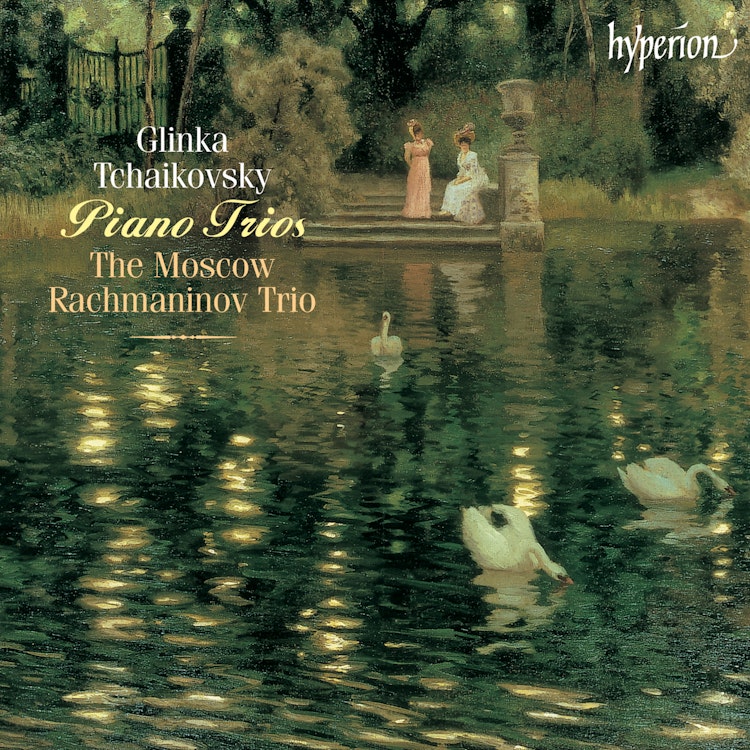
Glinka's Trio pathétique was originally scored for clarinet, bassoon, and piano, but is more often heard in the version for violin, cello, and piano featured on this recording.
Composition History
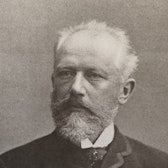
Tchaikovsky's Piano Trio in A minor Op 50 was composed in memory of Nikolai Rubinstein, a pianist and conductor who died unexpectedly in 1881.
Cultural Impact
The tradition of 'elegiac' piano trios in Russia, including works by Rachmaninov and Shostakovich, is seen as a musical manifestation of the saying: 'When a Russian is sad, he is very sad; when a Russian is very sad, then he is at his very best'.
Composer's Artistic Vision
Mikhail Glinka, born into this 'ethnically empty musical world,' was determined to bring a Russian character into his music, stating, 'I want my work to be completely national, in its subject and in the music'.
Compositional Technique
Tchaikovsky's Piano Trio in A minor Op 50 is his only work for this combination of instruments and is structured in three movements, with the second and third movements uniquely described as 'IIa' and 'IIb'.
Historical Context
When Louis Spohr visited St Petersburg in 1802, he found the city's musical life dominated by foreign musicians due to an earlier ukase (edict) by the Eastern Orthodox Church that instructed musical instruments to be broken and burned.
Composition History
Tchaikovsky's patron, Mme Nadezhda von Meck, had also urged him to write a trio for her ensemble, which was financially supported by her and at one point included Debussy as its pianist.